ExxonMobil
Energy Stream
A modular narrative system for non-linear storytelling in physical space
A modular narrative system for non-linear storytelling in physical space
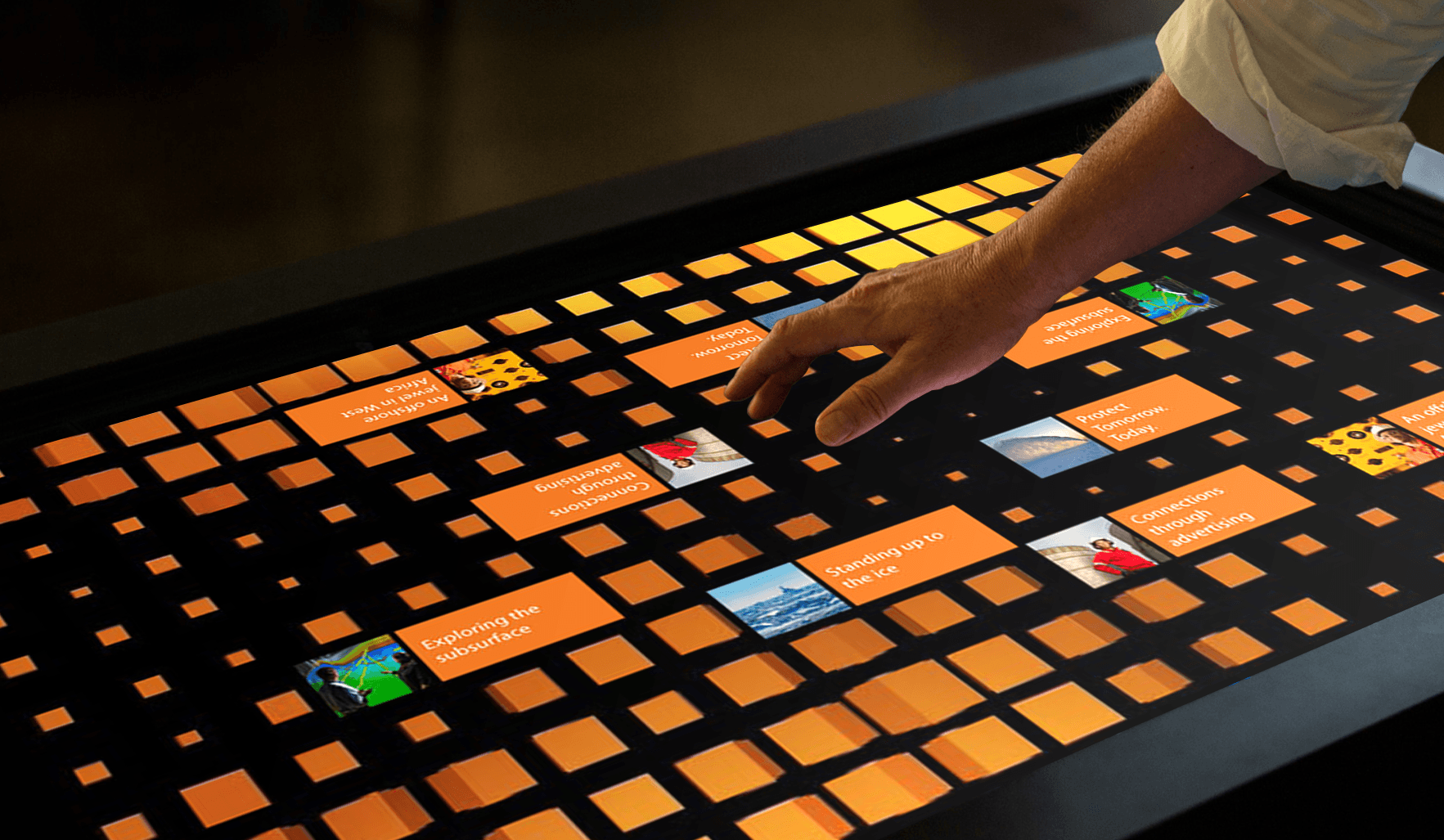
Energy Stream is a modular narrative system designed for non-linear exploration in a physical environment. Variable audiences, entry points, and dwell time make linear paths unreliable, so structure carries the story instead of scripted flows, allowing visitors to navigate, connect, and revisit ideas while the narrative remains coherent.
Energy Stream is a modular narrative system designed for non-linear exploration in a physical environment. Variable audiences, entry points, and dwell time make linear paths unreliable, so structure carries the story instead of scripted flows, allowing visitors to navigate, connect, and revisit ideas while the narrative remains coherent.
ROLE
Lead Experience Designer
DURATION
Multi-phase program
SURFACES
Physical installation
Large-format displays
SCOPE
Narrative system design
Story element framework
Content modularity rules
OUTCOME
Narrative coherence
Extensible structure
Scalable content system
ROLE
Lead Experience Designer
DURATION
Multi-phase program
SURFACES
Physical installation
Large-format displays
SCOPE
Narrative system design
Story element framework
Content modularity rules
OUTCOME
Narrative coherence
Extensible structure
Scalable content system
ROLE
Lead Experience Designer
DURATION
Multi-phase program
SURFACES
Physical installation
Large-format displays
SCOPE
Narrative system design
Story element framework
Content modularity rules
OUTCOME
Narrative coherence
Extensible structure
Scalable content system
Why Linear Stories Fail in Physical Space
Traditional storytelling assumes a shared starting point, a controlled sequence, and sustained attention. In physical environments, those assumptions collapse.
Visitors arrive from different directions, move non-linearly, engage briefly or deeply, and often leave mid-story. When sequence breaks, meaning fragments and relationships disappear.
Constraints of physical space
The system was designed for the following constraints:
No shared entry point
The system cannot assume a beginning.
Unpredictable dwell time
Engagement ranges from seconds to minutes, with no reliable duration.
Non-linear movement
Visitors skip, backtrack, and jump ahead freely.
Interruption and return
People may leave and re-enter later with no memory of prior context.
Why Linear Stories Fail in Physical Space
Traditional storytelling assumes a shared starting point, a controlled sequence, and sustained attention. In physical environments, those assumptions collapse.
Visitors arrive from different directions, move non-linearly, engage briefly or deeply, and often leave mid-story. When sequence breaks, meaning fragments and relationships disappear.
Constraints of physical space
The system was designed for the following constraints:
No shared entry point
The system cannot assume a beginning.
Unpredictable dwell time
Engagement ranges from seconds to minutes, with no reliable duration.
Non-linear movement
Visitors skip, backtrack, and jump ahead freely.
Interruption and return
People may leave and re-enter later with no memory of prior context.
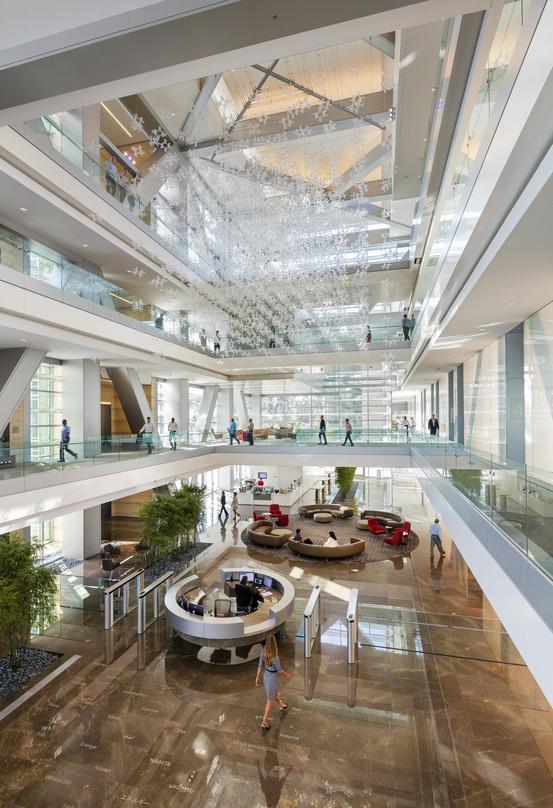
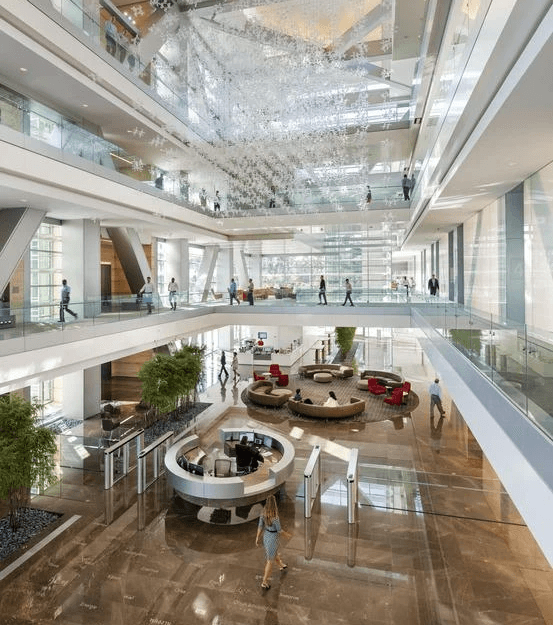
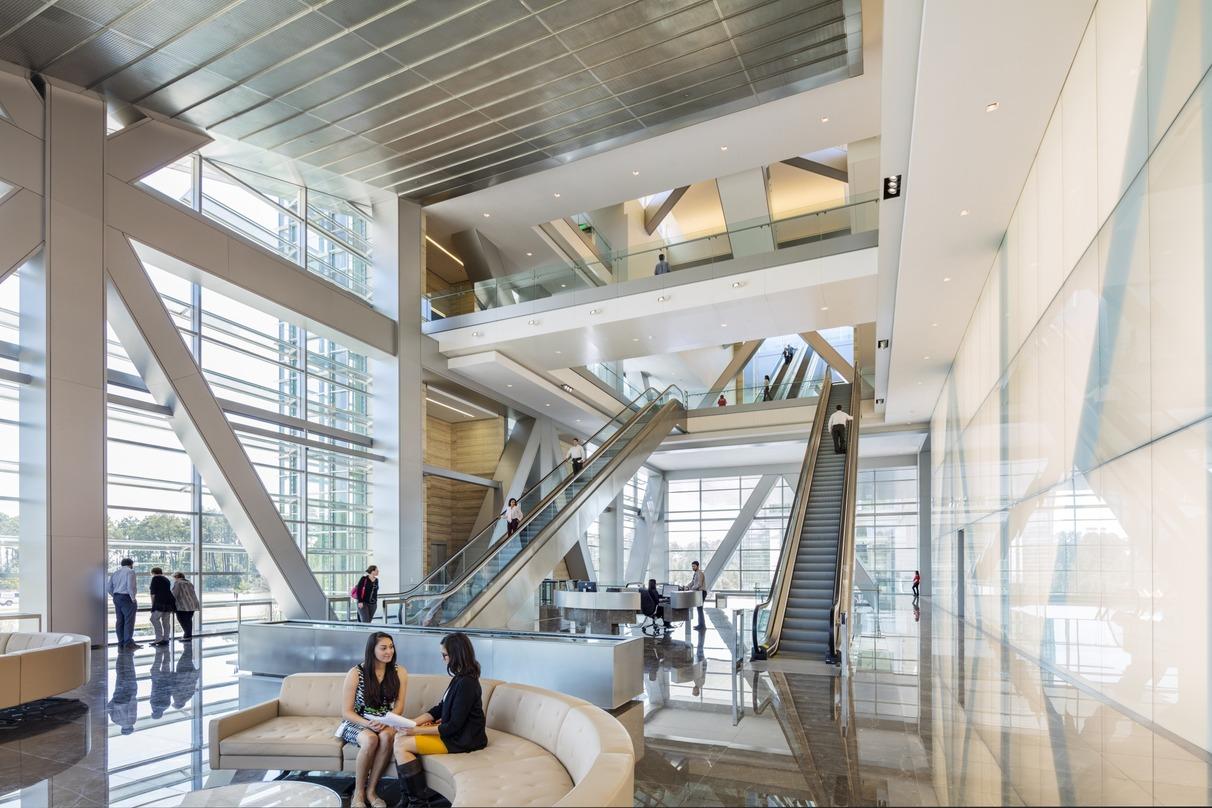
ExxonMobil Energy Center in Houston, TX, United States
ExxonMobil Energy Center in Houston, TX, United States
From Linear Stories to Modular Narratives
Those constraints required a different narrative model.
Individual stories remain linear. Each unit is a short, self-contained narrative arc.
What changed was the system’s dependence on sequence.
Modular narratives separate local linearity from global coherence. Individual units stand on their own, while relationships between units allow the broader story to emerge through proximity and exploration.
Exploration replaces completion. Visitors do not need to follow a prescribed path for the narrative to make sense.
From Linear Stories to Modular Narratives
Those constraints required a different narrative model.
Individual stories remain linear. Each unit is a short, self-contained narrative arc.
What changed was the system’s dependence on sequence.
Modular narratives separate local linearity from global coherence. Individual units stand on their own, while relationships between units allow the broader story to emerge through proximity and exploration.
Exploration replaces completion. Visitors do not need to follow a prescribed path for the narrative to make sense.

Individual narrative units (linear)
Individual narrative units (linear)
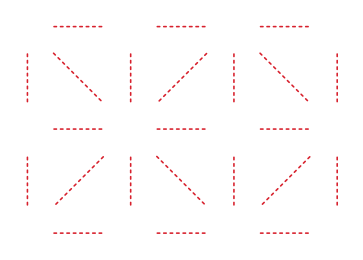
System-level coherence through relationships
System-level coherence through relationships
The Narrative System
The Energy Stream narrative system is built in four layers. Each layer defines a different responsibility: what exists, how meaning connects, how the system must behave under real conditions, and how it is expressed in the physical space.
The Narrative System
The Energy Stream narrative system is built in four layers. Each layer defines a different responsibility: what exists, how meaning connects, how the system must behave under real conditions, and how it is expressed in the physical space.
Narrative units
Each story is designed as a short, self-contained narrative arc. A visitor can enter, engage, and exit any unit without needing prior context or explanation.
Units are intentionally bounded. They communicate a clear idea on their own, while remaining open to connection with other stories across the space.
Narrative units
Each story is designed as a short, self-contained narrative arc. A visitor can enter, engage, and exit any unit without needing prior context or explanation.
Units are intentionally bounded. They communicate a clear idea on their own, while remaining open to connection with other stories across the space.
Relationships
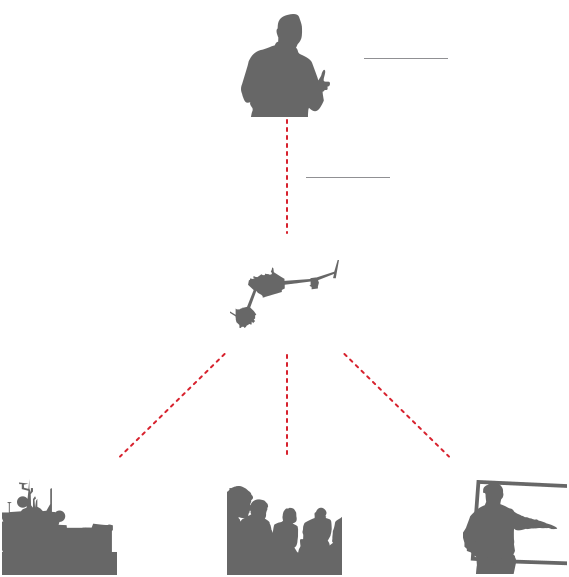
Meaning accumulates through relationships rather than sequence. Units connect through thematic grouping, spatial proximity, and repetition instead of linear progression.
These relationships allow ideas to reinforce one another across space and time, so coherence emerges through exploration rather than completion.
Relationships
Meaning accumulates through relationships rather than sequence. Units connect through thematic grouping, spatial proximity, and repetition instead of linear progression.
These relationships allow ideas to reinforce one another across space and time, so coherence emerges through exploration rather than completion.
Behavioral Rules
The system is designed to preserve meaning when attention, order, and duration cannot be controlled.
•
Units must stand alone
•
Relationships carry meaning, not sequence
•
Completion is not required for understanding
•
Interruption and return are first-class states
Behavioral Rules
The system is designed to preserve meaning when attention, order, and duration cannot be controlled.
•
Units must stand alone
•
Relationships carry meaning, not sequence
•
Completion is not required for understanding
•
Interruption and return are first-class states
Physical Expressions
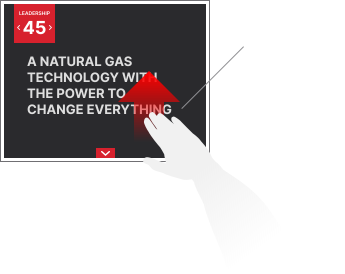
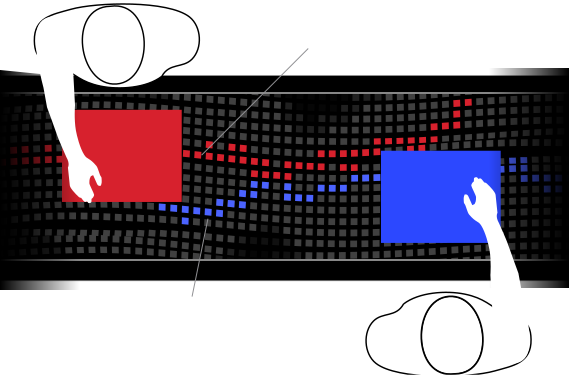
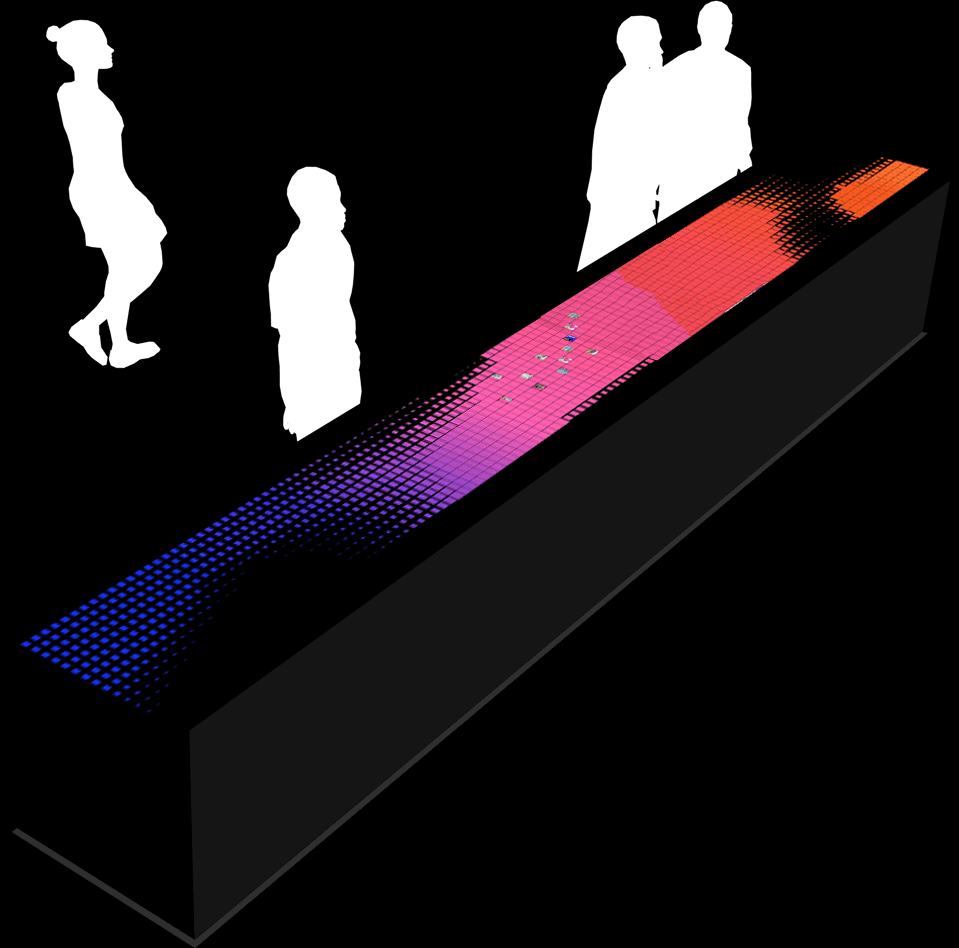
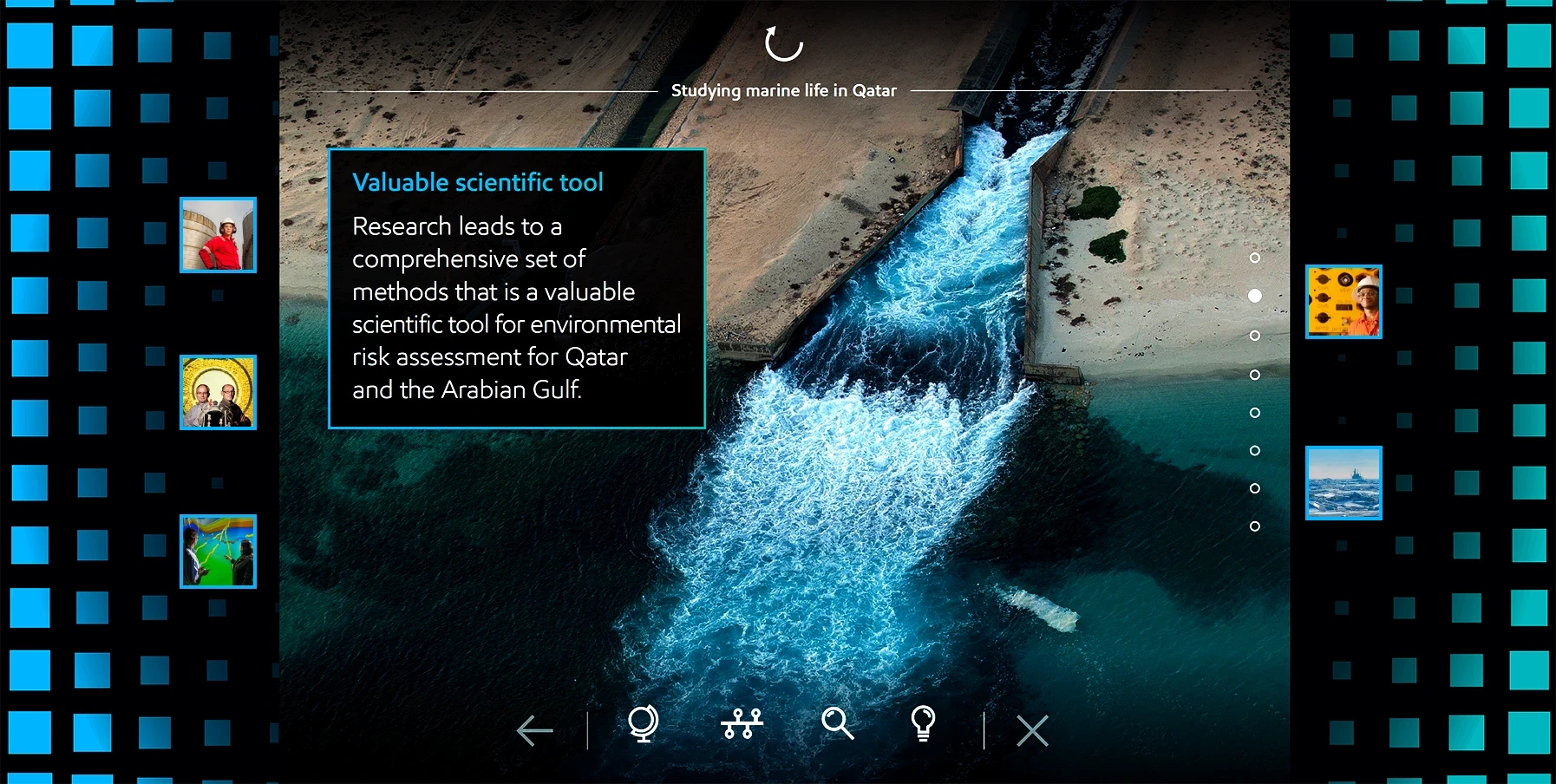
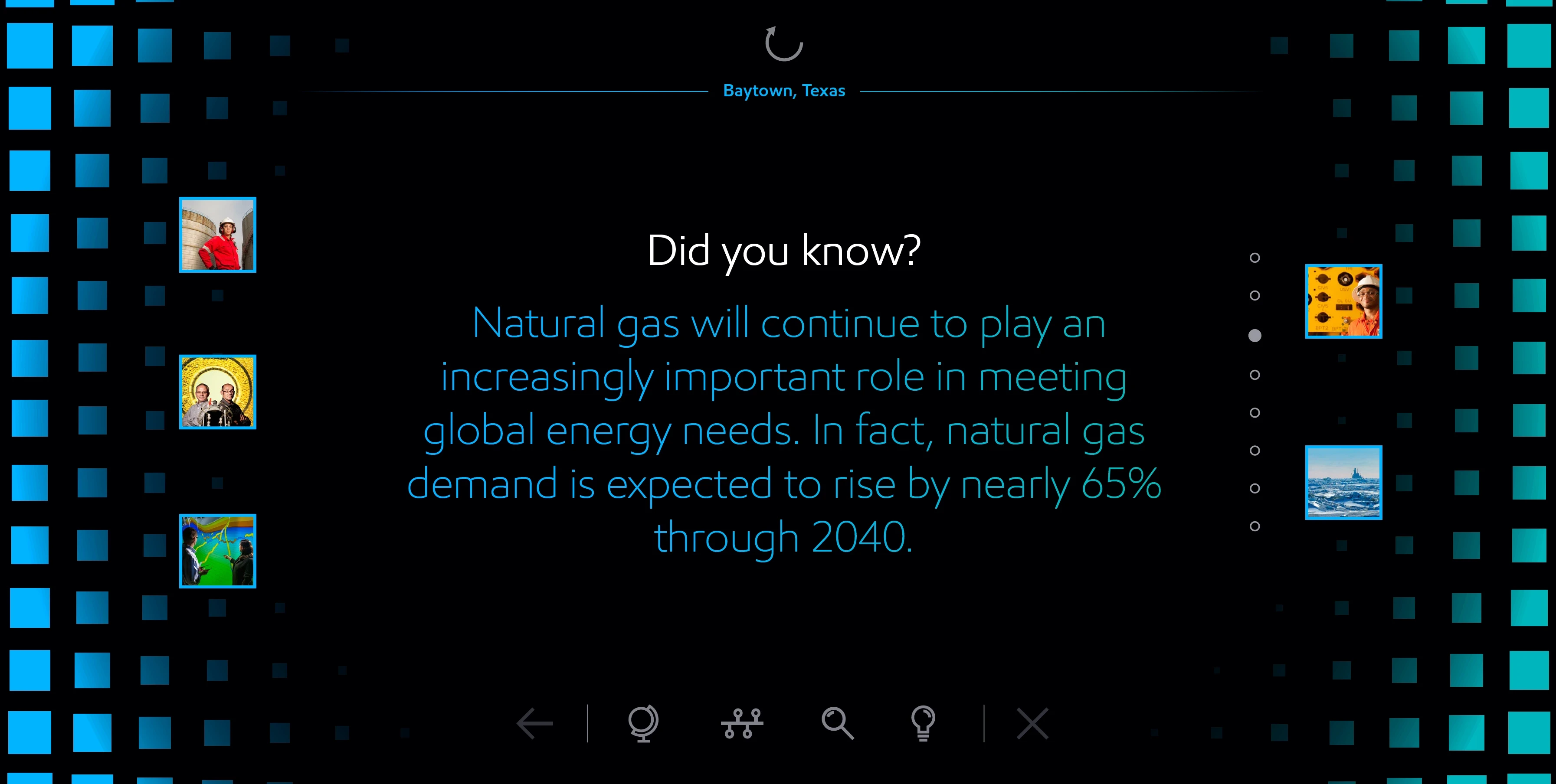
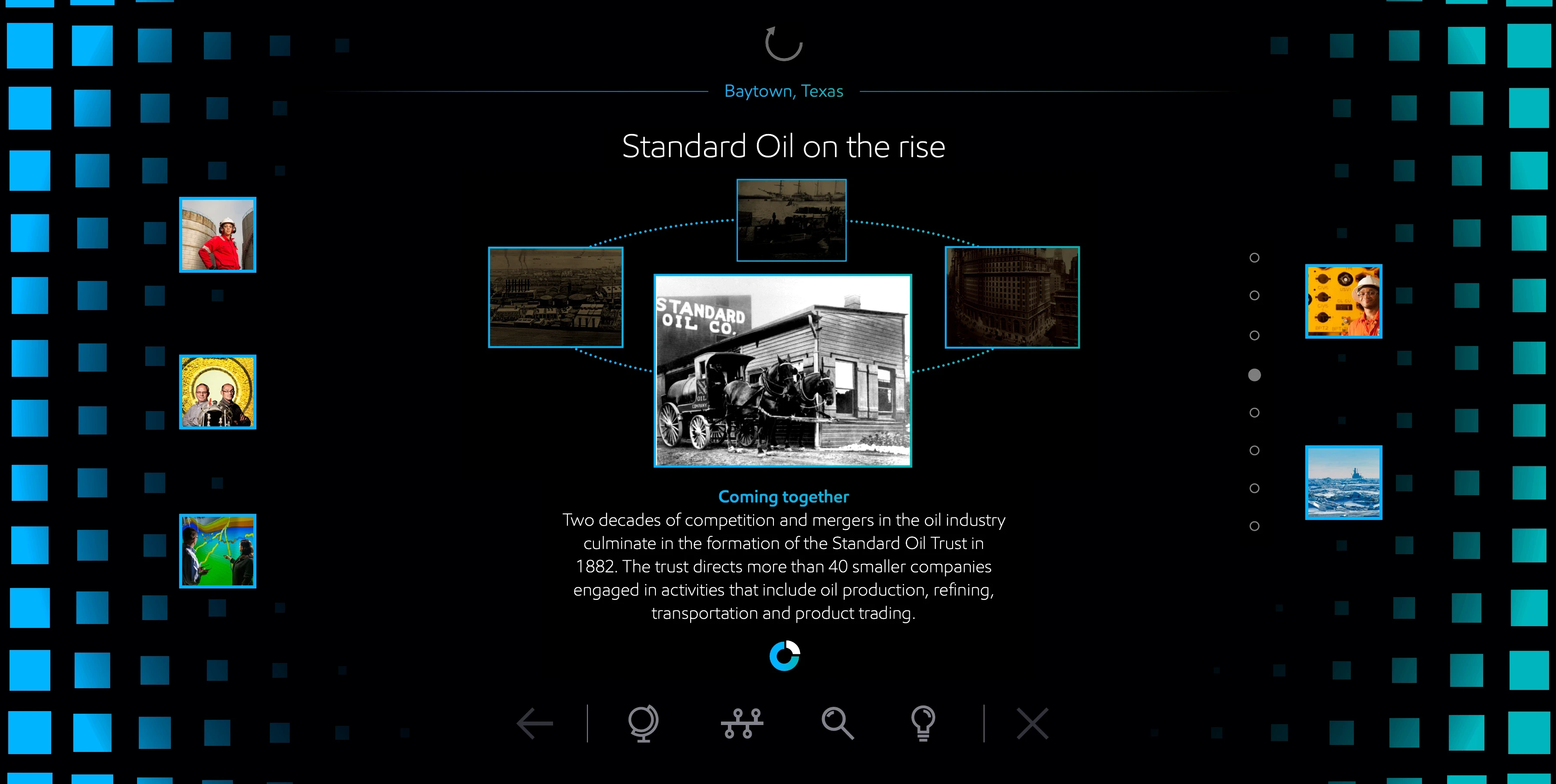
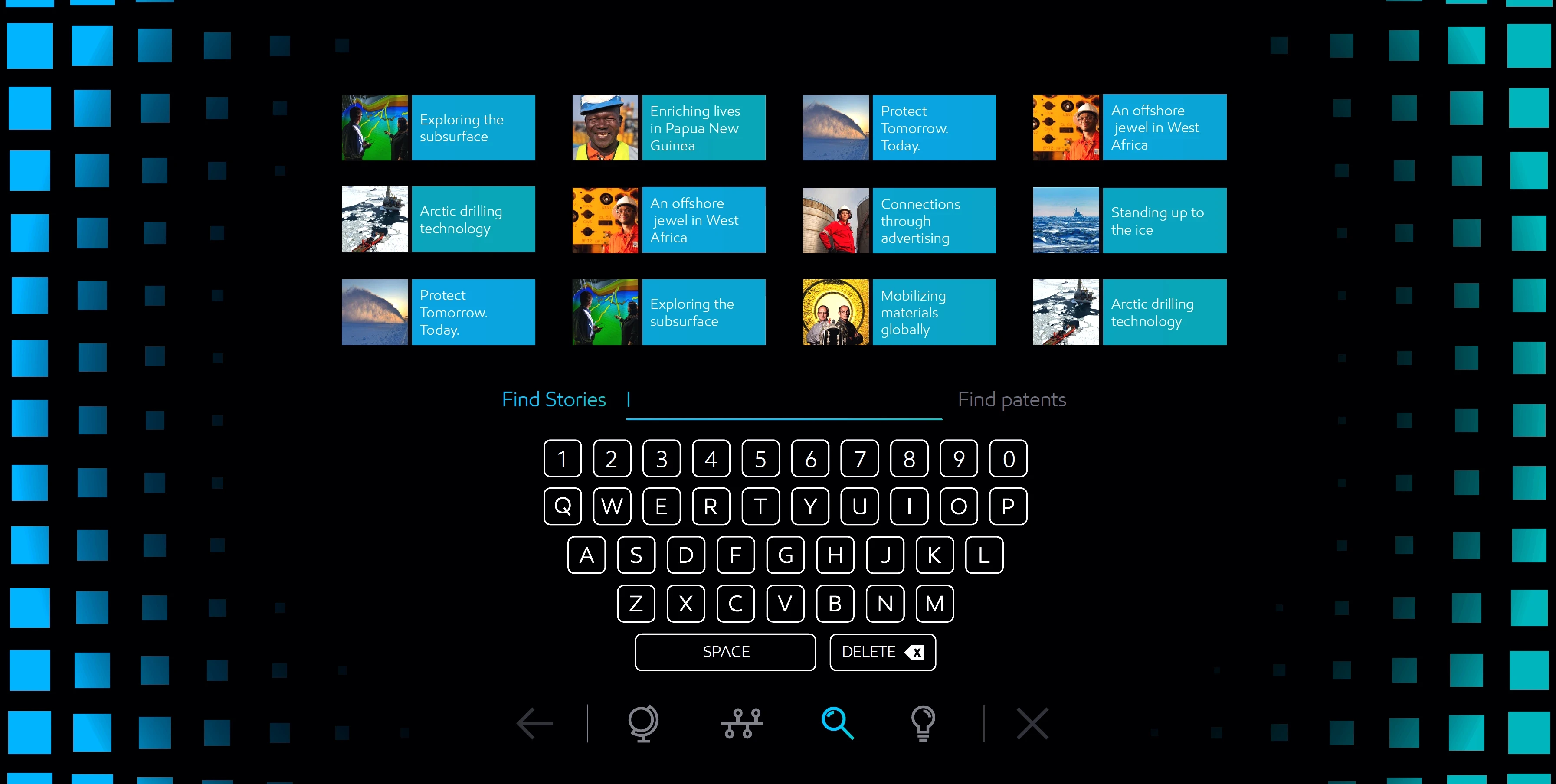
The system is expressed through large-format displays and the Energy Stream table, which make the underlying structure visible without enforcing a path. The interface reveals relationships and constraints so visitors can build understanding through movement and choice.
Physical Expressions
The system is expressed through large-format displays and the Energy Stream table, which make the underlying structure visible without enforcing a path. The interface reveals relationships and constraints so visitors can build understanding through movement and choice.
Where the System Becomes Visible
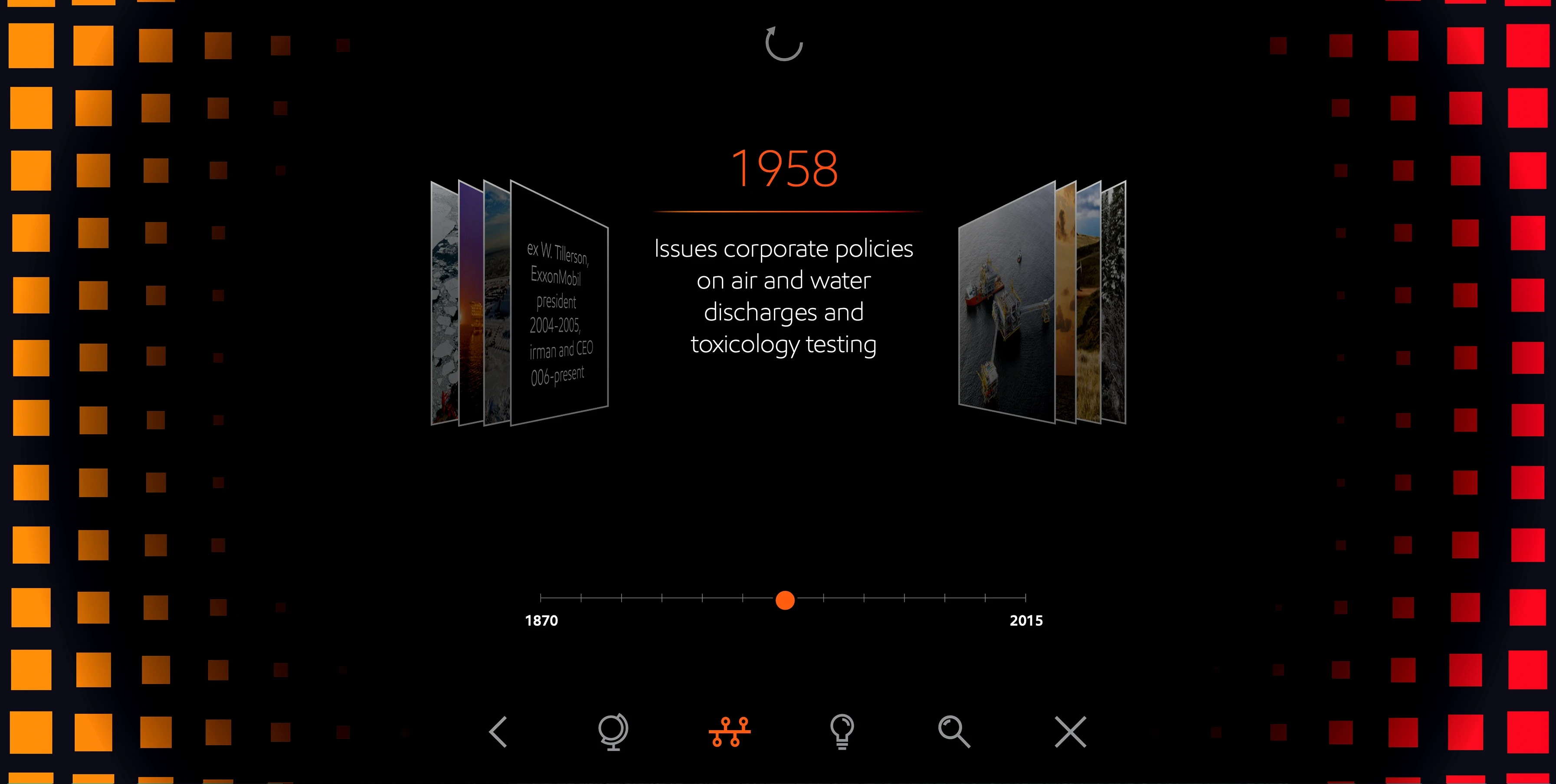
The Energy Stream table does not tell the story.
It reveals the structure that holds it together.
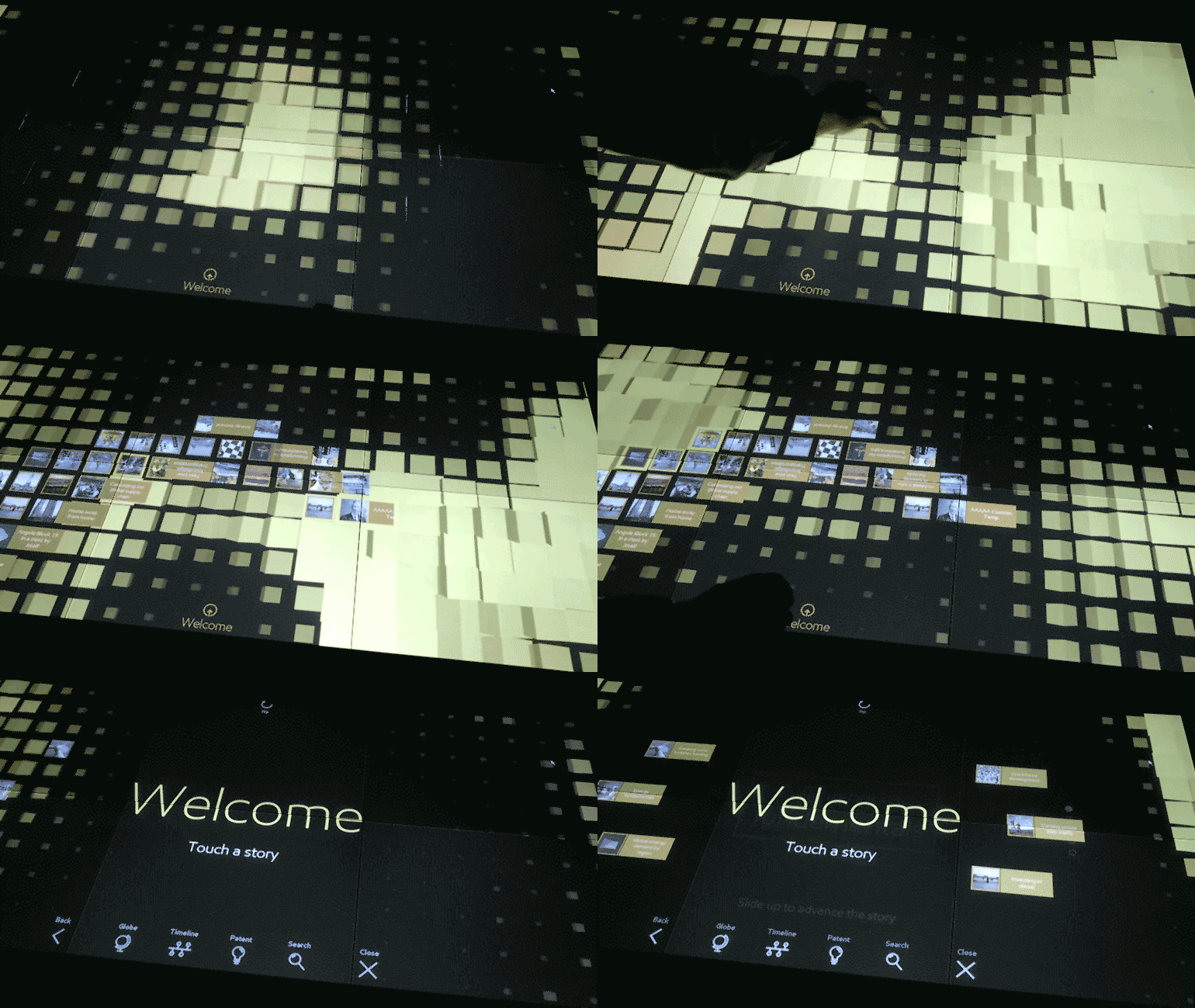
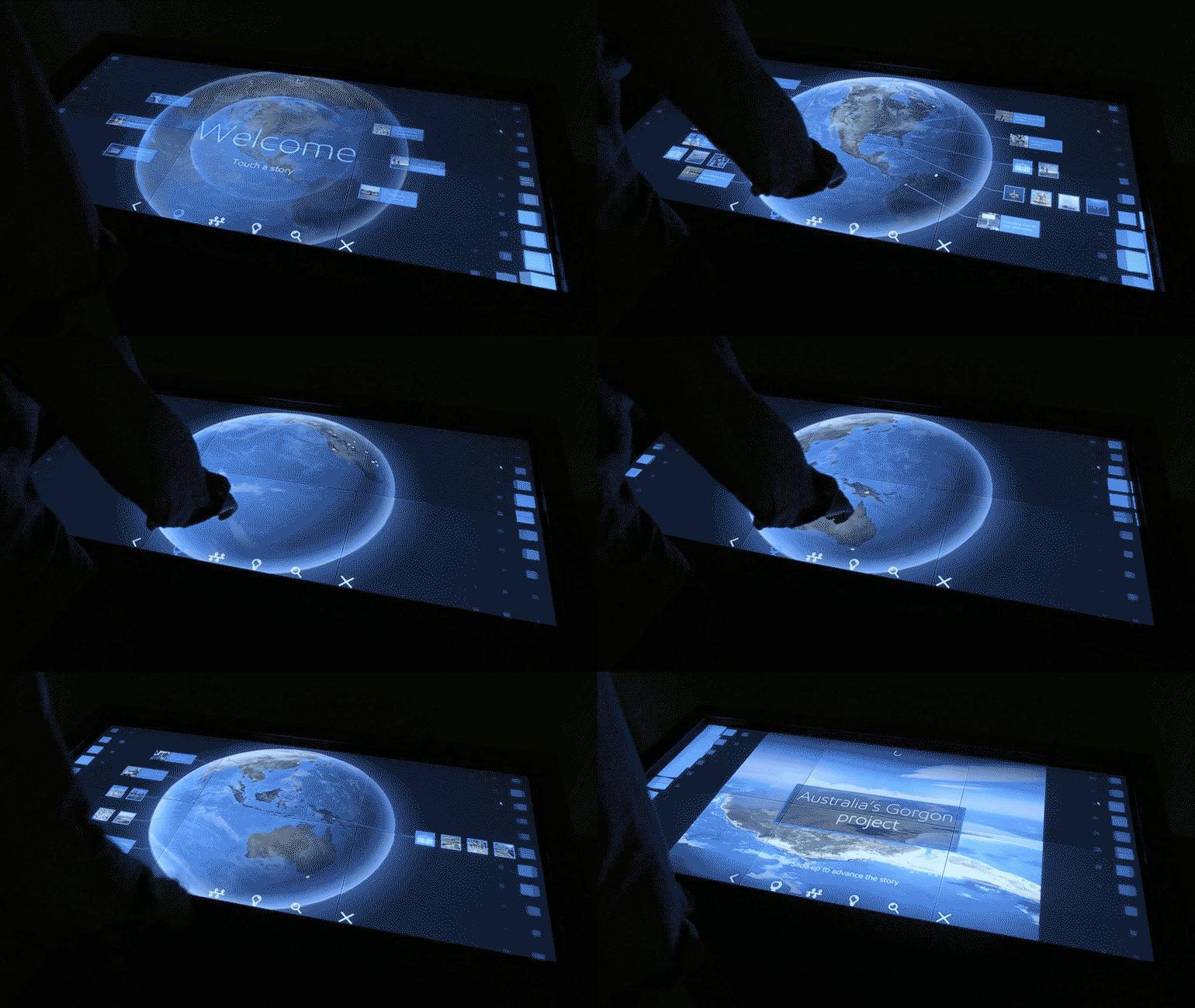
Each element is legible on its own, while relationships between units remain visible through grouping, proximity, and repetition. Visitors can enter anywhere, compare ideas across space, and leave with a coherent understanding shaped by their own path.
The interface does not control attention or enforce order.
It reflects the system’s rules and lets exploration do the rest.
Where the System Becomes Visible
The Energy Stream table does not tell the story.
It reveals the structure that holds it together.
Each element is legible on its own, while relationships between units remain visible through grouping, proximity, and repetition. Visitors can enter anywhere, compare ideas across space, and leave with a coherent understanding shaped by their own path.
The interface does not control attention or enforce order.
It reflects the system’s rules and lets exploration do the rest.


What Non-Linear Storytelling Requires
Structure must replace sequence.
When audiences control their path, narrative coherence cannot depend on order. Meaning has to be carried by clearly defined story units and the relationships between them, not by a prescribed beginning or end.
Systems must tolerate interruption.
Physical environments introduce variability in attention, entry point, and dwell time. Narrative systems designed for re-entry and partial engagement remain legible over time, while linear stories quickly degrade.
Clarity comes from constraint, not control.
Limiting narrative primitives and defining how they connect creates freedom without chaos. The system guides exploration without forcing it, allowing visitors to form understanding through composition rather than direction.
What Non-Linear Storytelling Requires
Structure must replace sequence.
When audiences control their path, narrative coherence cannot depend on order. Meaning has to be carried by clearly defined story units and the relationships between them, not by a prescribed beginning or end.
Systems must tolerate interruption.
Physical environments introduce variability in attention, entry point, and dwell time. Narrative systems designed for re-entry and partial engagement remain legible over time, while linear stories quickly degrade.
Clarity comes from constraint, not control.
Limiting narrative primitives and defining how they connect creates freedom without chaos. The system guides exploration without forcing it, allowing visitors to form understanding through composition rather than direction.
More case studies
More case studies


Made with love ♡
Made with love ♡
© 2026 Michael Fofrich
© 2026 Michael Fofrich