Peloton
Lanebreak Tread
A rhythm-based treadmill game for runners and walkers
A rhythm-based treadmill game for runners and walkers
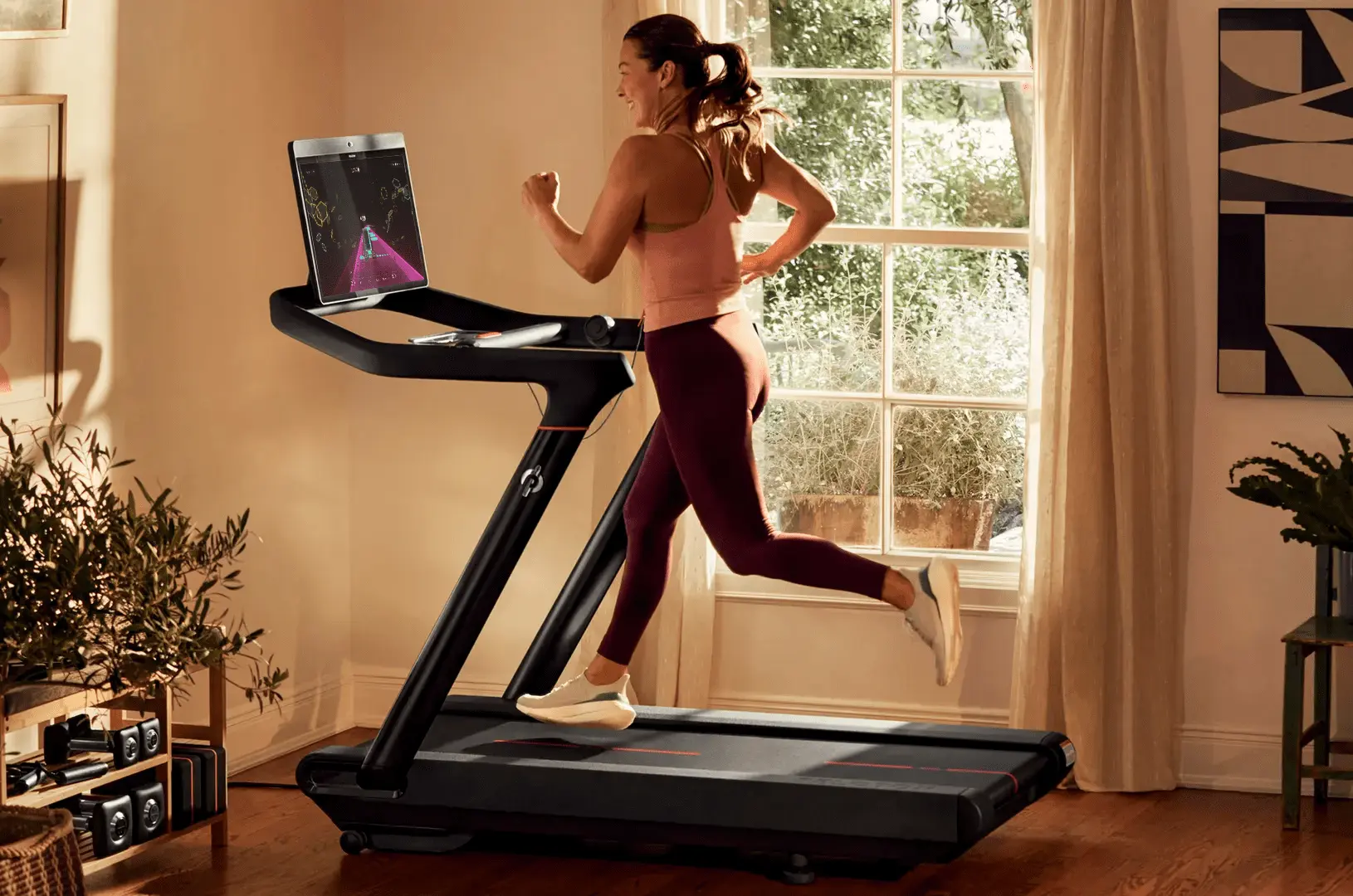
Built for the Peloton Tread and Tread+, Lanebreak introduced real-time, music-driven gameplay to treadmill workouts. A single system translated physical effort into clear feedback, staying rhythmic, readable in motion, and aligned with the pacing of a Peloton workout. Each level followed the structure of its music, turning movement, timing, and intensity into a cohesive gameplay loop.
Built for the Peloton Tread and Tread+, Lanebreak introduced real-time, music-driven gameplay to treadmill workouts. A single system translated physical effort into clear feedback, staying rhythmic, readable in motion, and aligned with the pacing of a Peloton workout. Each level followed the structure of its music, turning movement, timing, and intensity into a cohesive gameplay loop.
ROLE
Lead UX Designer
DURATION
12-month MVP
SURFACES
Peloton Tread / Tread+
SCOPE
Gameplay interaction model
HUD and FTUX systems
Feedback mechanics
OUTCOME
New workout category
Choice-based effort
Sustained adoption
ROLE
Lead UX Designer
DURATION
12-month MVP
SURFACES
Peloton Tread / Tread+
SCOPE
Gameplay interaction model
HUD and FTUX systems
Feedback mechanics
OUTCOME
New workout category
Choice-based effort
Sustained adoption
ROLE
Lead UX Designer
DURATION
12-month MVP
SURFACES
Peloton Tread / Tread+
SCOPE
Gameplay interaction model
HUD and FTUX systems
Feedback mechanics
OUTCOME
New workout category
Choice-based effort
Sustained adoption
The Limits That Defined the Game
To turn physical effort into feedback, the interaction model needed structure. The hardware shaped every choice, and the system had to work inside that reality. Three constraints grounded the experience and framed what the game could become.
The Limits That Defined the Game
To turn physical effort into feedback, the interaction model needed structure. The hardware shaped every choice, and the system had to work inside that reality. Three constraints grounded the experience and framed what the game could become.
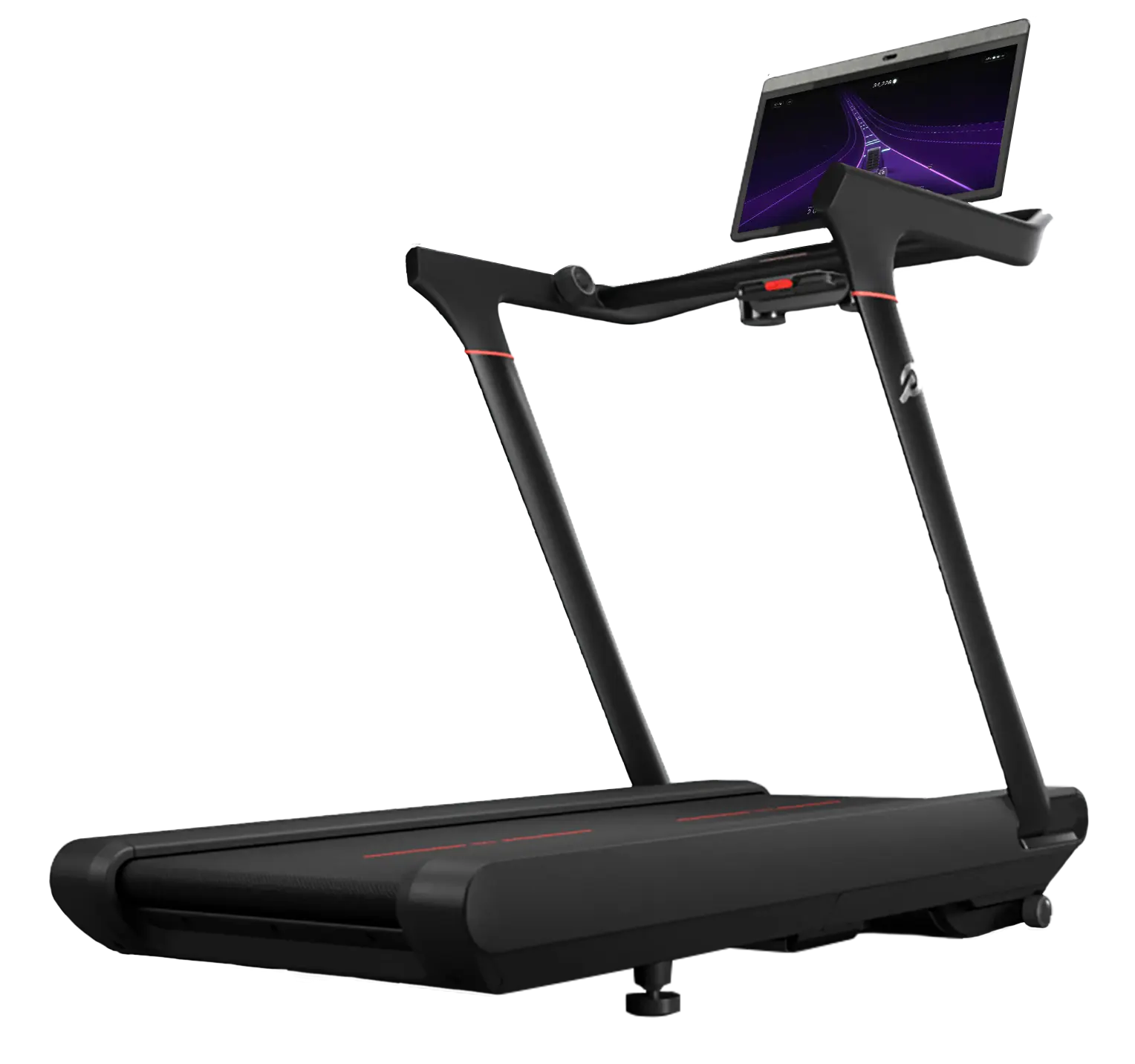
Only two physical inputs
Players interacted using only the incline and speed knobs. With no safe way to tap or swipe at speed, every mechanic needed to grow from these two controls.
Only two physical inputs
Players interacted using only the incline and speed knobs. With no safe way to tap or swipe at speed, every mechanic needed to grow from these two controls.
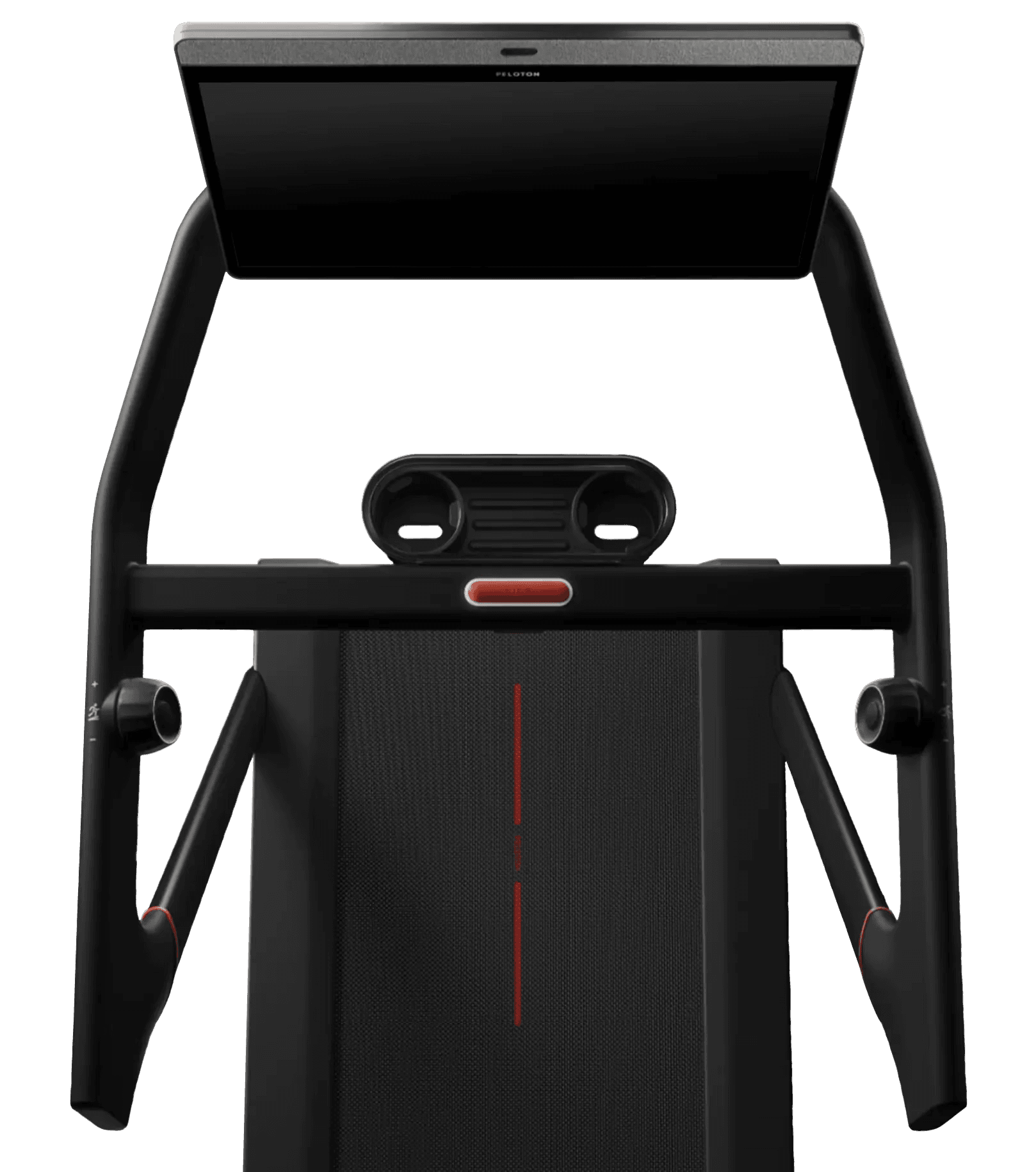
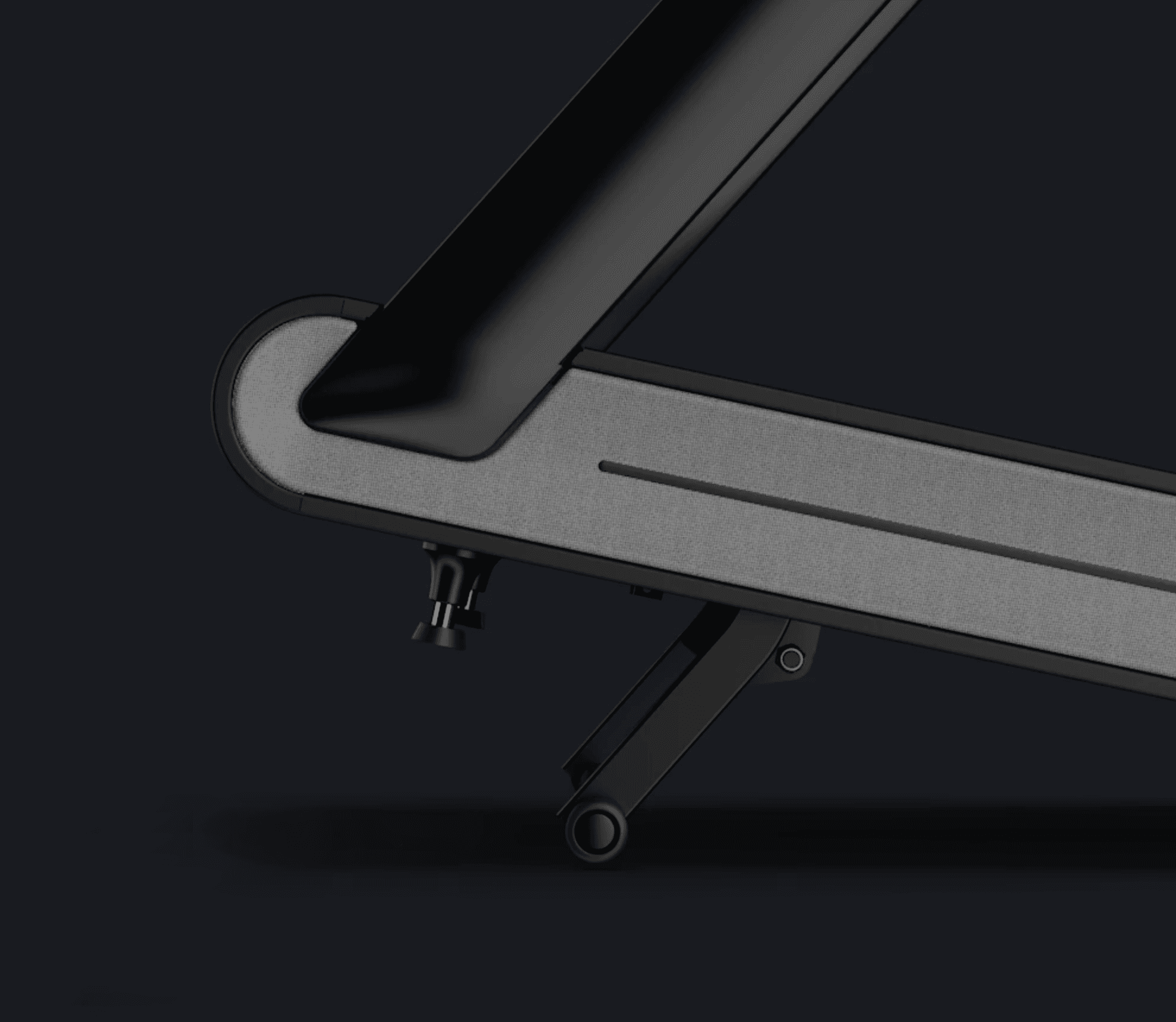
Hardware & motor limits
Large or rapid incline changes could strain the motor. This set strict boundaries on how incline could be used, how often effort could be introduced, and how pacing needed to flow.
Hardware & motor limits
Large or rapid incline changes could strain the motor. This set strict boundaries on how incline could be used, how often effort could be introduced, and how pacing needed to flow.
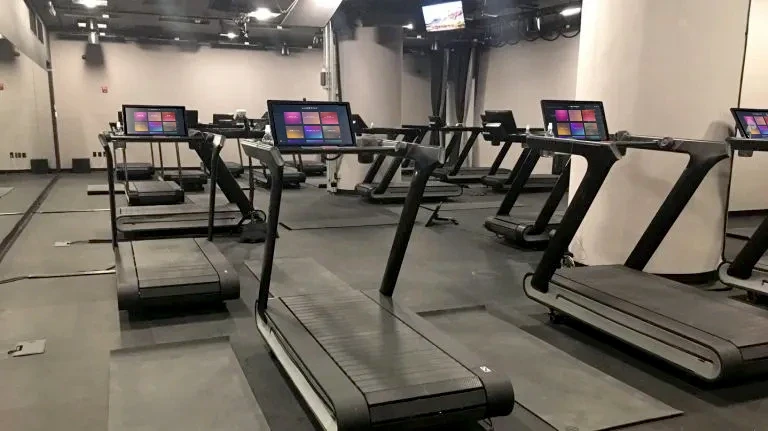
Built for video, not games
The Tread display was built for video, not real time rendering, so processing power and memory were limited. Visuals had to load fast and run efficiently, which shaped our animation choices, asset design, and the need for simple, reliable timing.
Built for video, not games
The Tread display was built for video, not real time rendering, so processing power and memory were limited. Visuals had to load fast and run efficiently, which shaped our animation choices, asset design, and the need for simple, reliable timing.
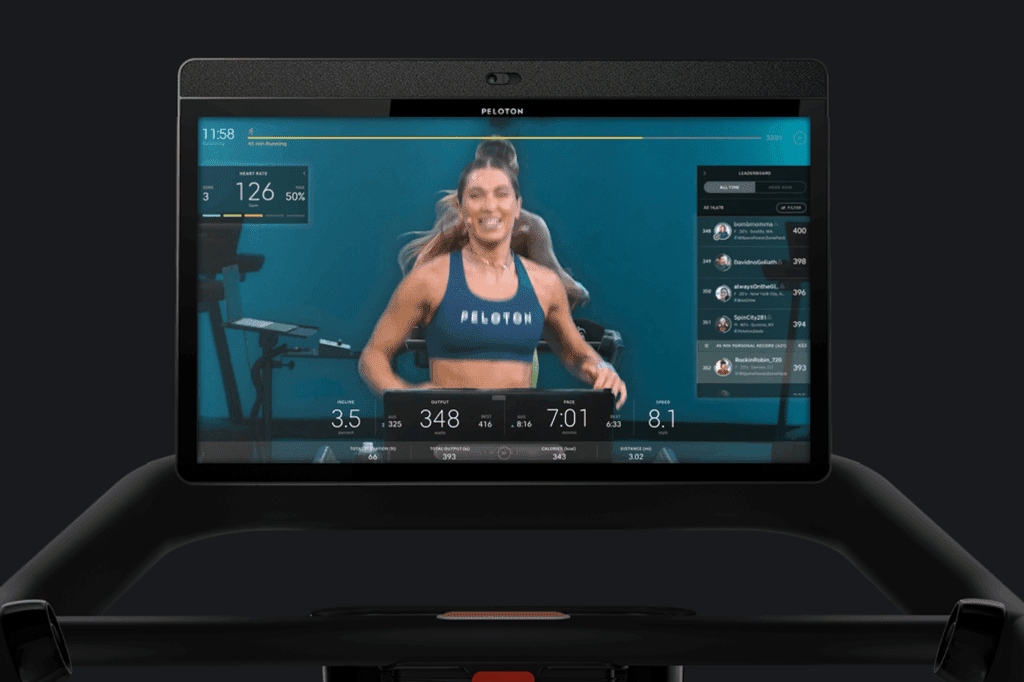
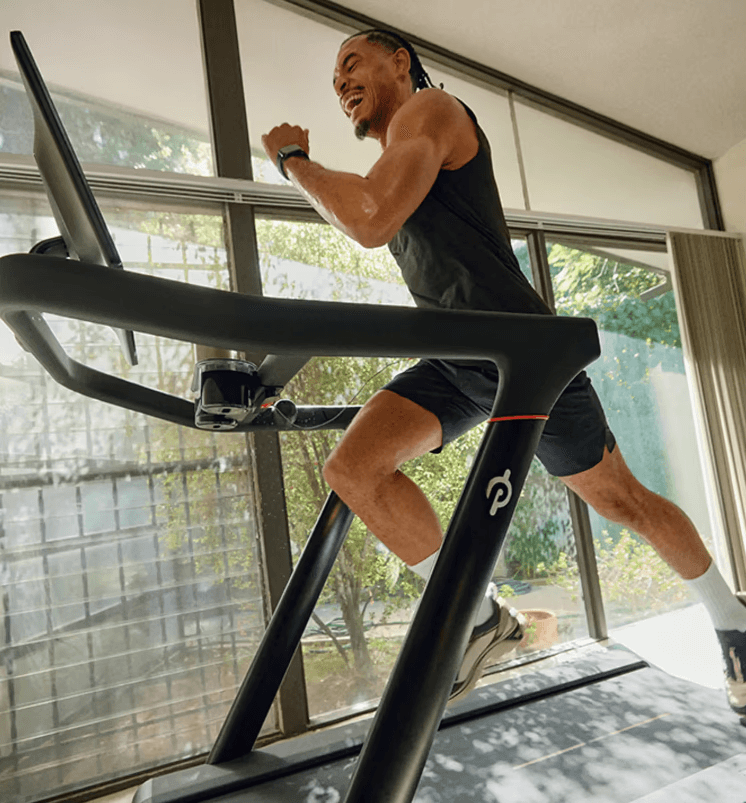
Supporting every pace
Lanebreak needed to support walkers, joggers, and elite runners. Difficulty had to scale with the workout. The system needed to meet each player at their own effort level without adding cognitive load.
Supporting every pace
Lanebreak needed to support walkers, joggers, and elite runners. Difficulty had to scale with the workout. The system needed to meet each player at their own effort level without adding cognitive load.
How We Defined the MVP
I partnered with Product, Engineering, and Game Design to define mechanics that formed a clear, scalable foundation for Tread. The work emphasized clarity, rhythm, safety, and moments designed around real, physical effort.
The MVP became: Lane Selection, Beats, Pacers, and Hills.
How We Defined the MVP
I partnered with Product, Engineering, and Game Design to define mechanics that formed a clear, scalable foundation for Tread. The work emphasized clarity, rhythm, safety, and moments designed around real, physical effort.
The MVP became: Lane Selection, Beats, Pacers, and Hills.
From Constraints to Play
Lanebreak turned hardware limits into the structure of the game. With only two knobs and a moving body, the mechanics had to teach through motion, stay readable at speed, and make effort feel rewarding. To ground the system, we mapped how inputs, music, and visuals should work together before defining each gameplay moment.
From Constraints to Play
Lanebreak turned hardware limits into the structure of the game. With only two knobs and a moving body, the mechanics had to teach through motion, stay readable at speed, and make effort feel rewarding. To ground the system, we mapped how inputs, music, and visuals should work together before defining each gameplay moment.
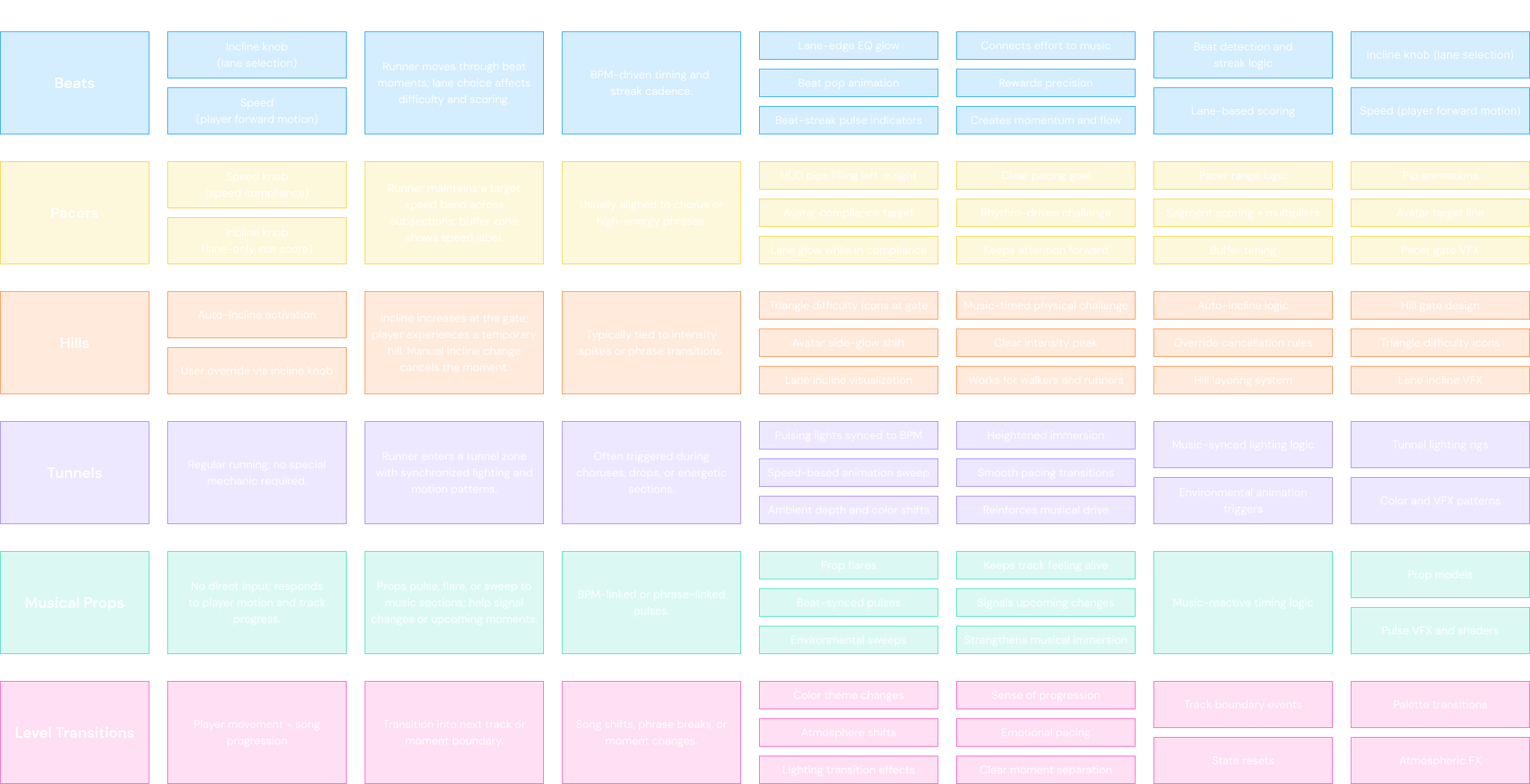
Lane Selection: The foundation of movement
The incline knob shifts between three lanes. Each lane has its own effort level and point value. Lane selection sets intensity, path, and pacing. It is the core interaction that anchors the game.
Lane Selection: The foundation of movement
The incline knob shifts between three lanes. Each lane has its own effort level and point value. Lane selection sets intensity, path, and pacing. It is the core interaction that anchors the game.
Beats: Effort rewarded through alignment
Beats followed the rhythm and phrasing of the track. Stay in the glowing lane while moving and you earn points. The timing reinforced precision through motion rather than instruction, teaching players the pattern of the song by feel. Movement, alignment, reward.
Beats: Effort rewarded through alignment
Beats followed the rhythm and phrasing of the track. Stay in the glowing lane while moving and you earn points. The timing reinforced precision through motion rather than instruction, teaching players the pattern of the song by feel. Movement, alignment, reward.
Pacers: Turning speed into strategy
Pacers guide players to match a target speed using only the speed knob. The segmented bar reflects compliance in real time and rewards maintaining the target.
Pacers: Turning speed into strategy
Pacers guide players to match a target speed using only the speed knob. The segmented bar reflects compliance in real time and rewards maintaining the target.
Hills: Challenge through controlled incline
Hills raise incline automatically but always with user control. Gates signal effort ahead and triangle icons show difficulty. Players can override any Hill at any time.
Hills: Challenge through controlled incline
Hills raise incline automatically but always with user control. Gates signal effort ahead and triangle icons show difficulty. Players can override any Hill at any time.
Iterating in Motion
We ran frequent internal playtests to evaluate readability and timing at speed. We simplified pacing cues, increased contrast during lane shifts, reduced unnecessary animation, and tuned colors to stay visible in peripheral vision while moving. Each iteration made the experience more intuitive in motion and more responsive to real treadmill behavior.
Iterating in Motion
We ran frequent internal playtests to evaluate readability and timing at speed. We simplified pacing cues, increased contrast during lane shifts, reduced unnecessary animation, and tuned colors to stay visible in peripheral vision while moving. Each iteration made the experience more intuitive in motion and more responsive to real treadmill behavior.
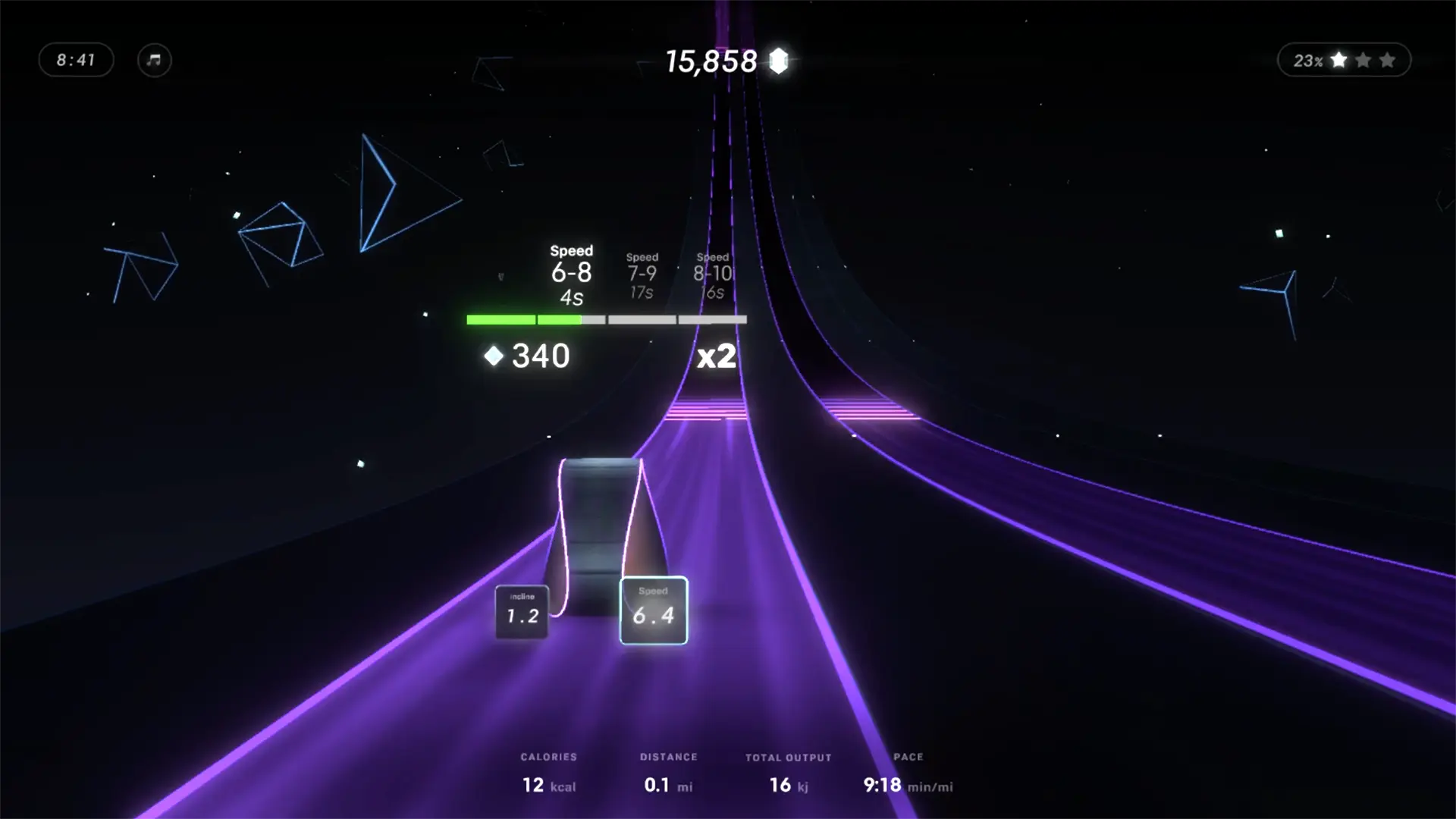
Effort-Aligned Feedback
Designing the HUD meant planning for limited focus. Players are running, breathing hard, and managing effort, not searching for cues. Every visual had to be glanceable and steady. Timing, color, and pacing guided attention so the interface could be felt as much as it was seen.
We designed the HUD around four principles:
•
Motion supports clarity
•
Color signals effort
•
Progress drives motivation
•
First-time use builds understanding
Effort-Aligned Feedback
Designing the HUD meant planning for limited focus. Players are running, breathing hard, and managing effort, not searching for cues. Every visual had to be glanceable and steady. Timing, color, and pacing guided attention so the interface could be felt as much as it was seen.
We designed the HUD around four principles:
•
Motion supports clarity
•
Color signals effort
•
Progress drives motivation
•
First-time use builds understanding
Before: Floating bar obstructed the forward view.
Before: Floating bar obstructed the forward view.
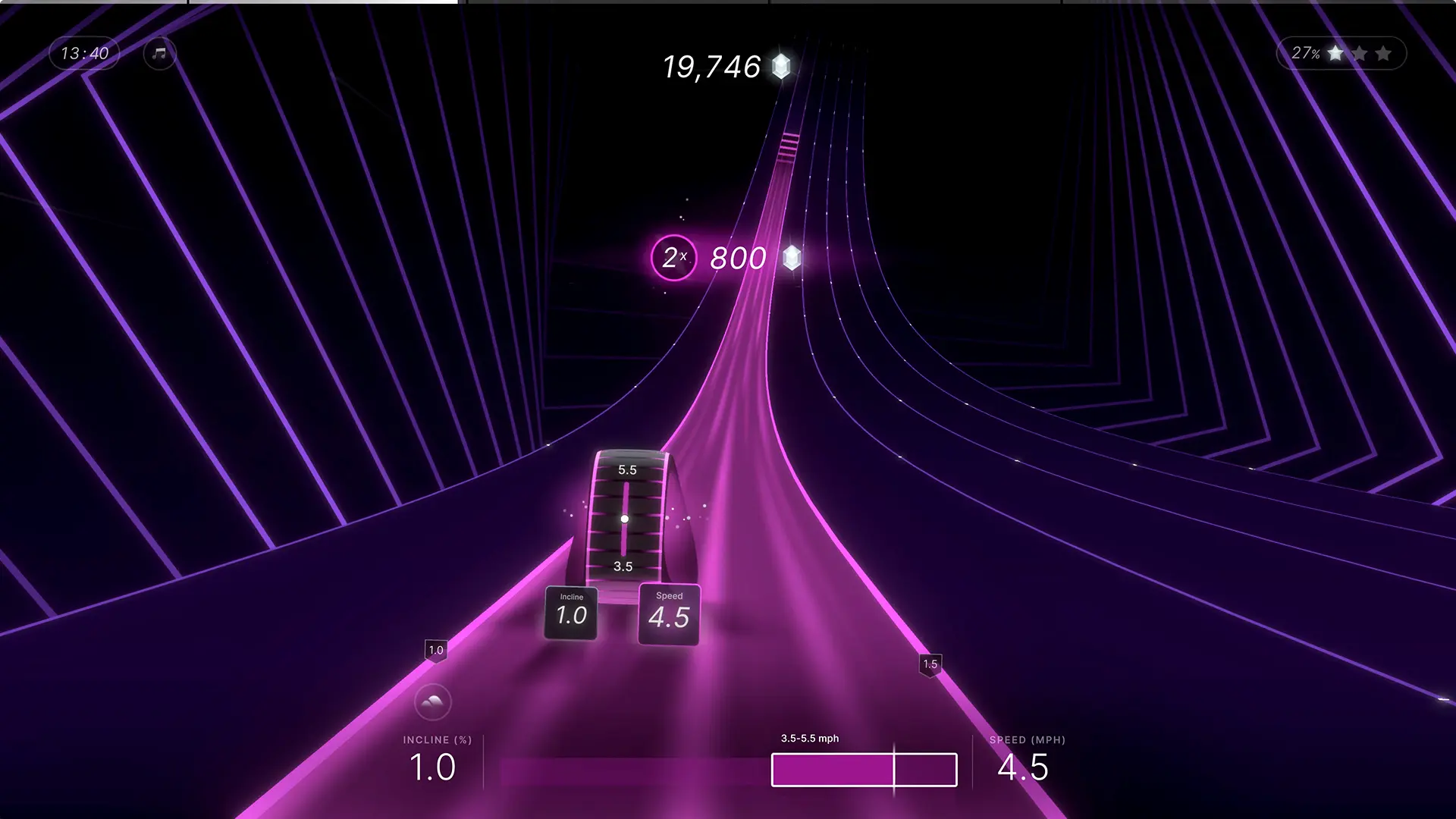
After: HUD-based compliance and a vertical avatar target made the experience clearer and easier to track.
After: HUD-based compliance and a vertical avatar target made the experience clearer and easier to track.
After: HUD-based compliance and a vertical avatar target made the experience clearer and easier to track.
Touchscreen Moments
When players aren’t moving, the touchscreen becomes the interface for choices before and after each workout, while knob controls remain for every in-motion interaction during gameplay.
Touchscreen Moments
When players aren’t moving, the touchscreen becomes the interface for choices before and after each workout, while knob controls remain for every in-motion interaction during gameplay.
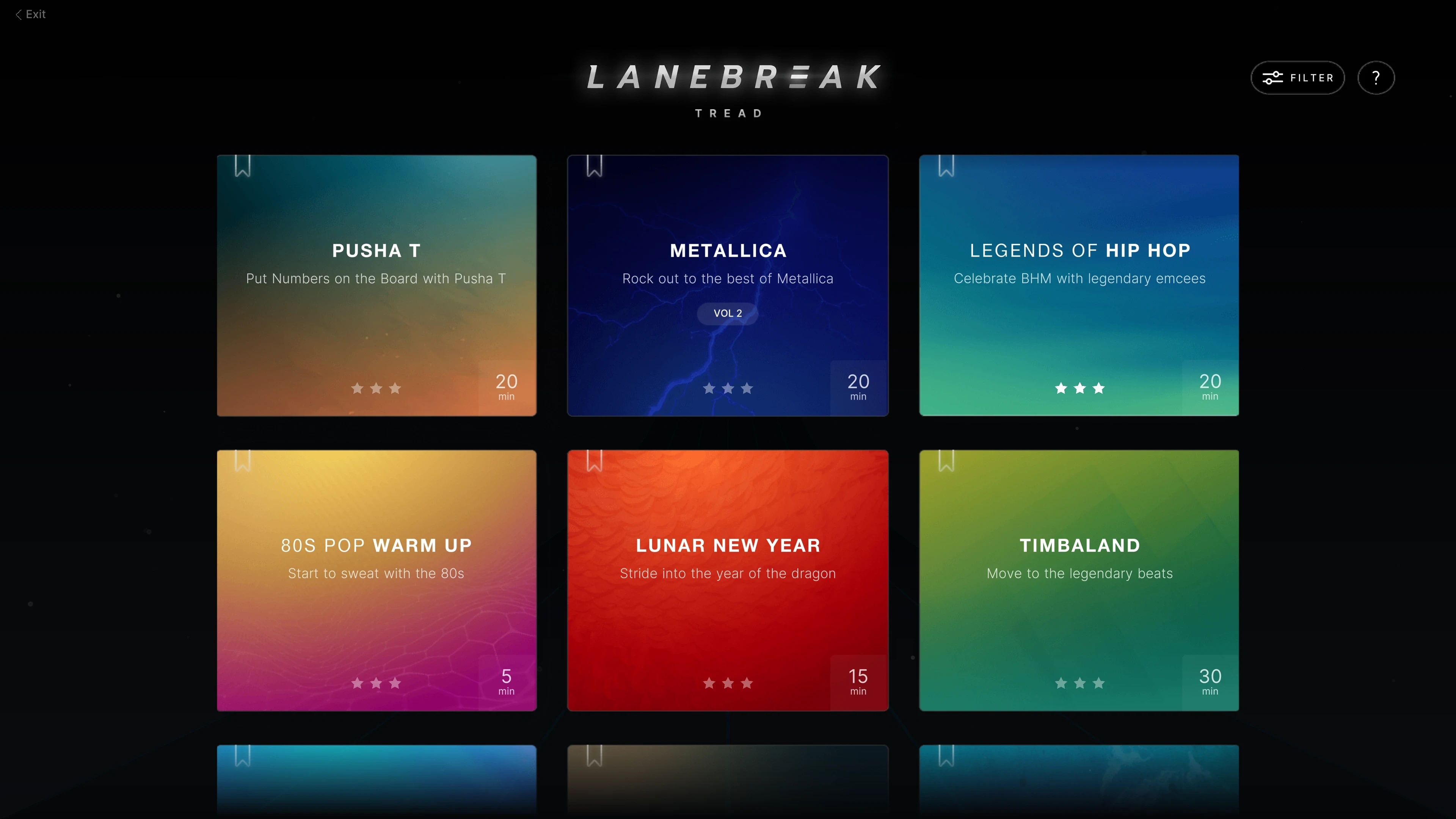
Level Select: Choose a workout by music and time.
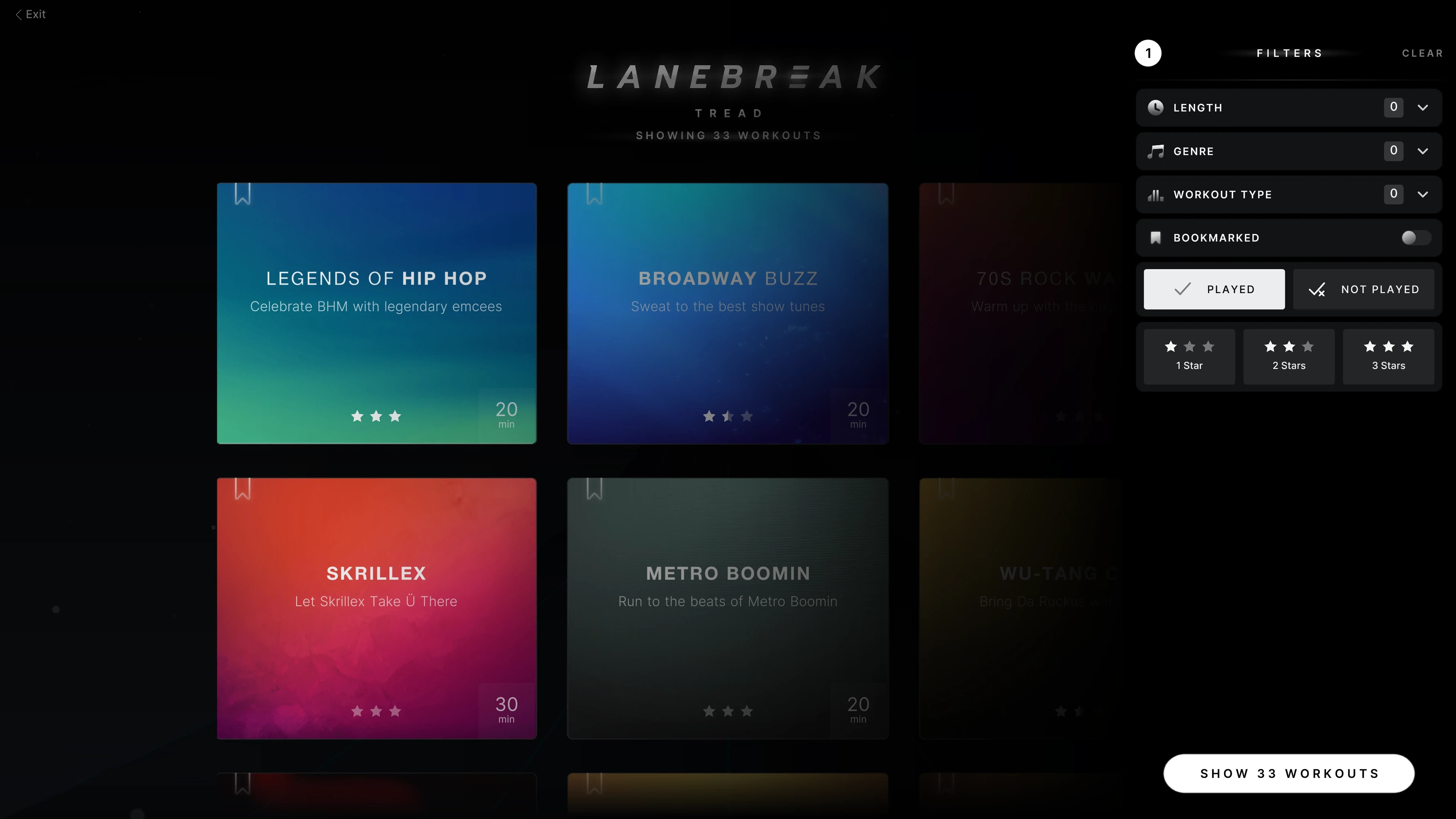
Filters: Refine only when you need to.
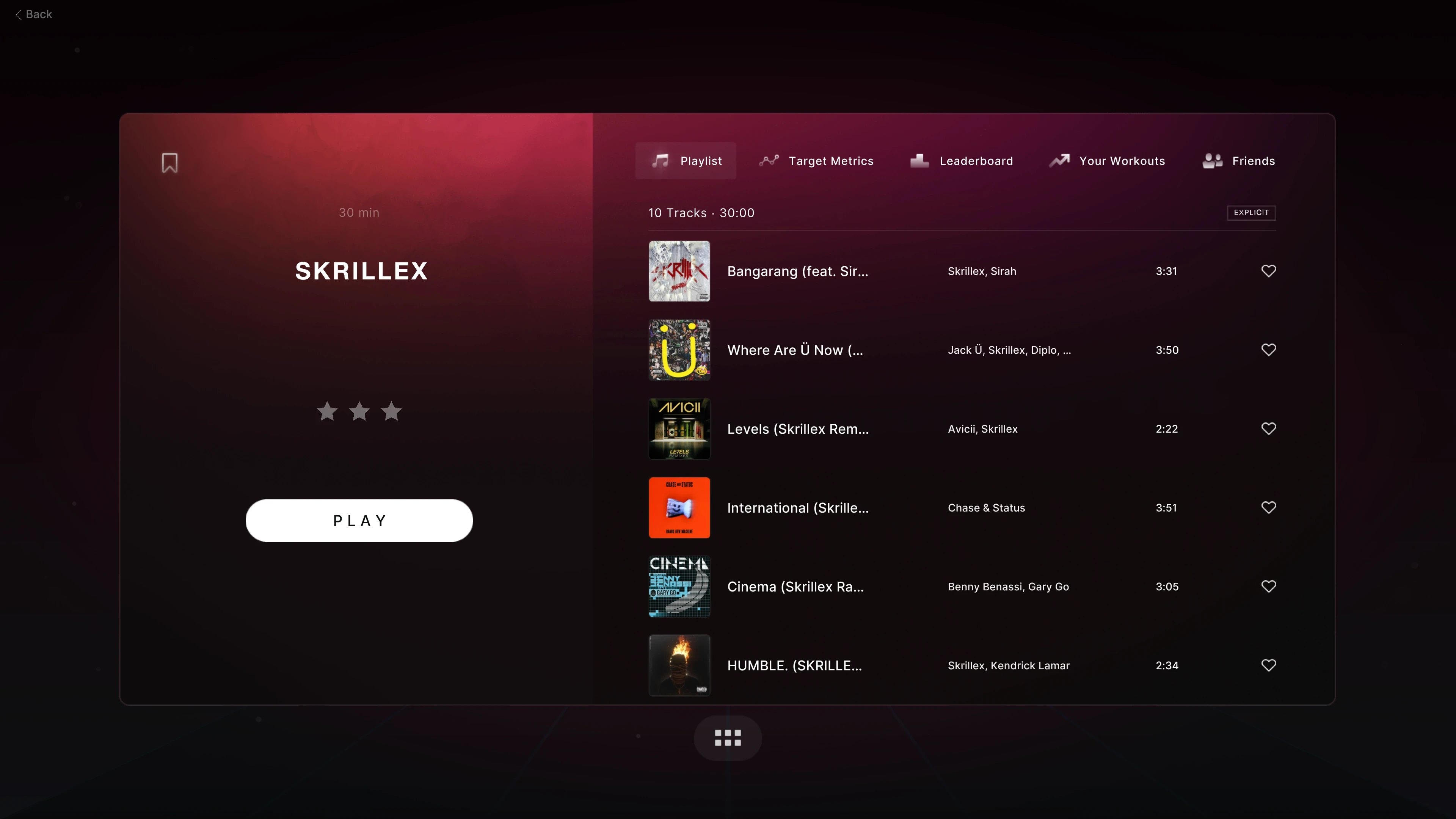
Playlist: Check the energy and vibe.
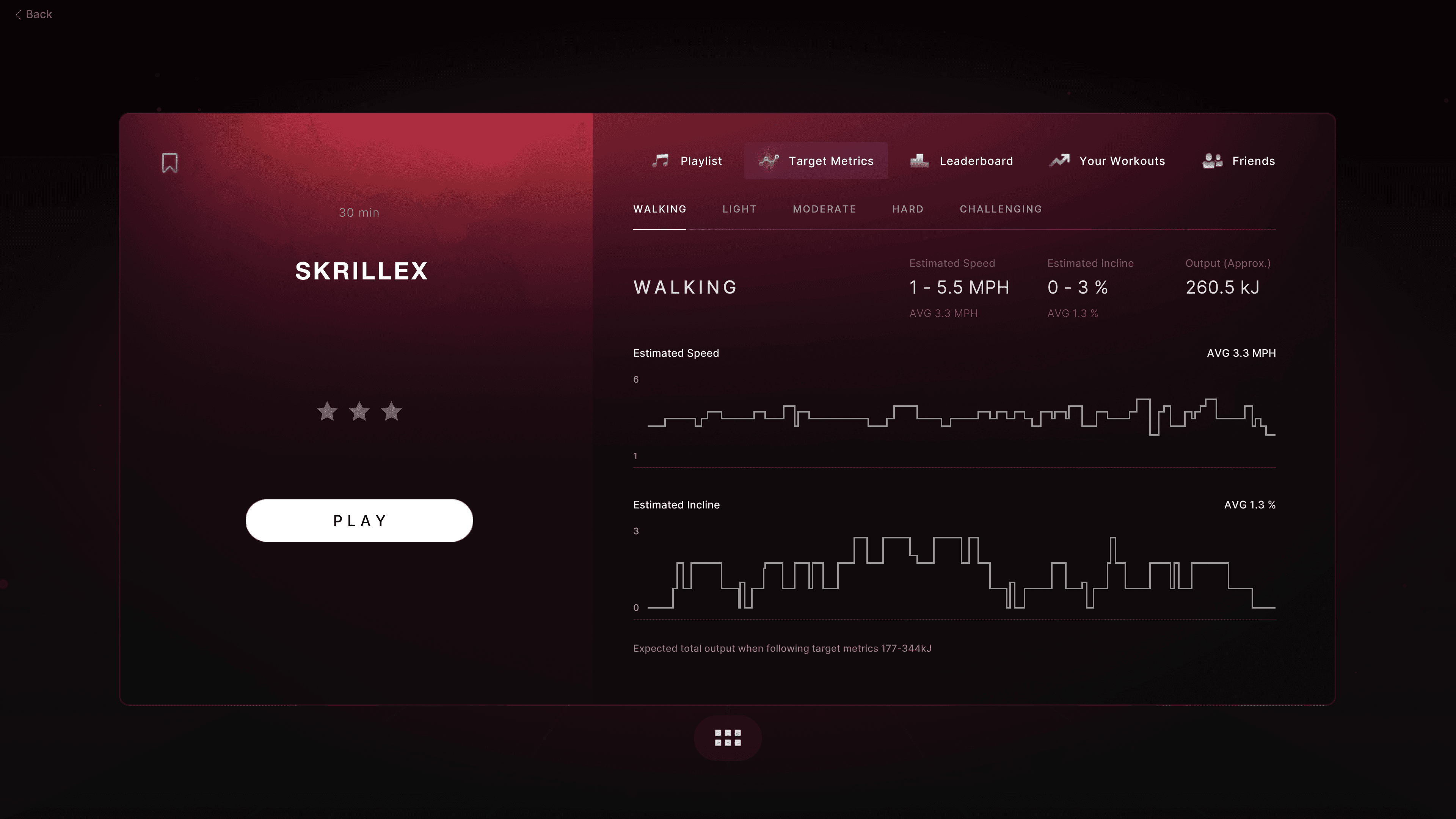
Metrics: Preview pace and incline.
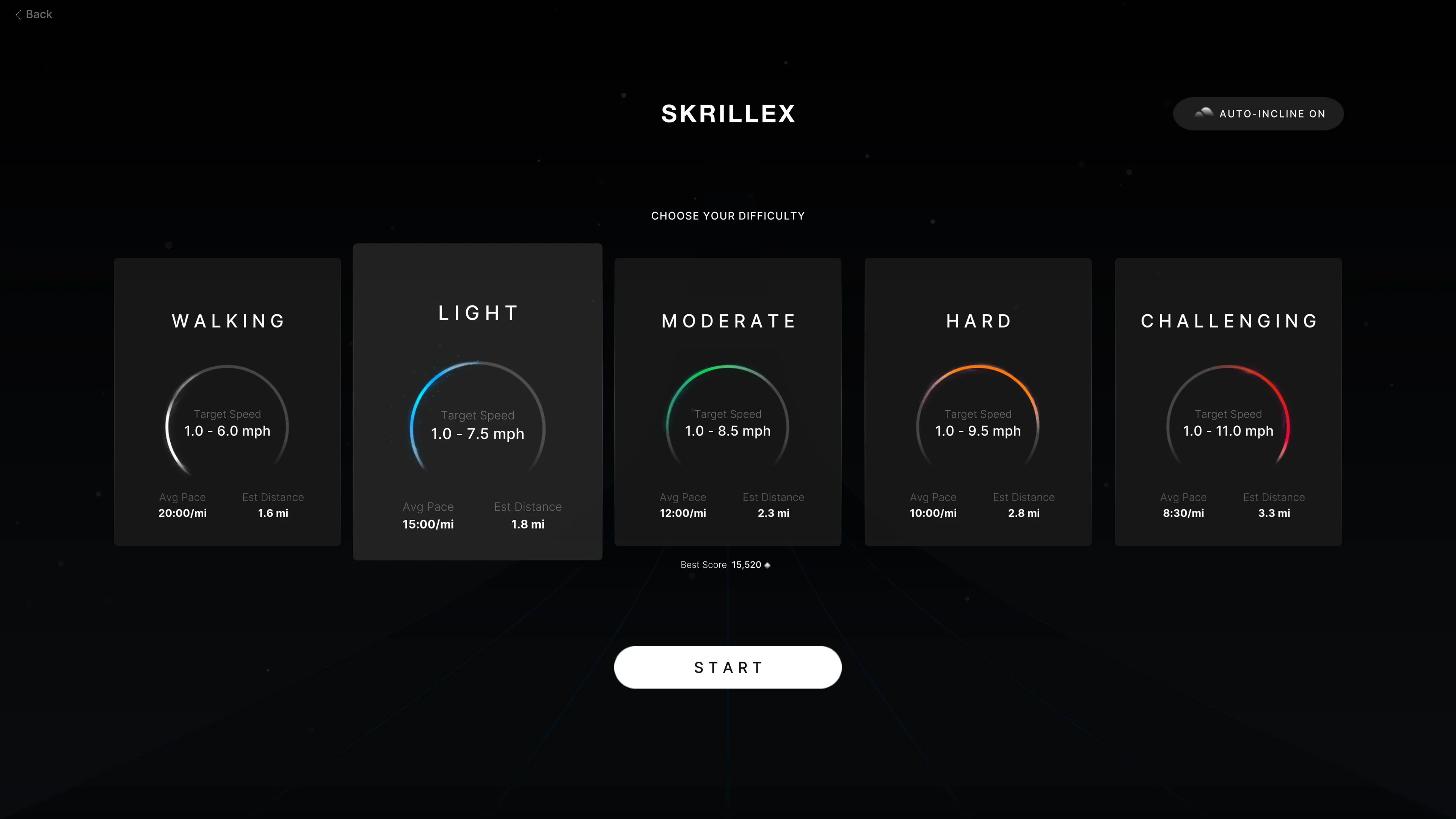
Difficulty: Match the challenge to your day.
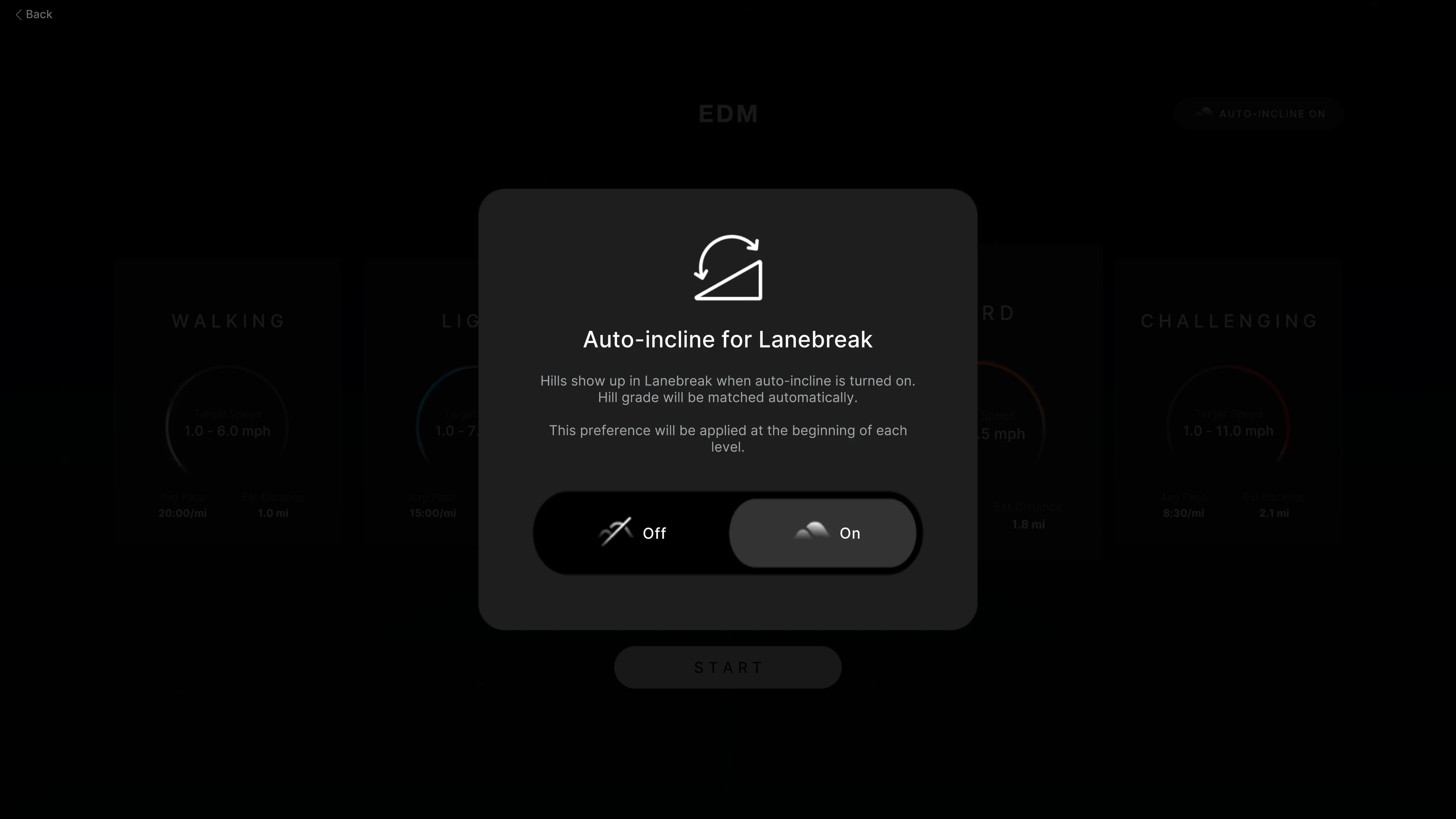
Auto-Incline: Enable hills safely before moving.
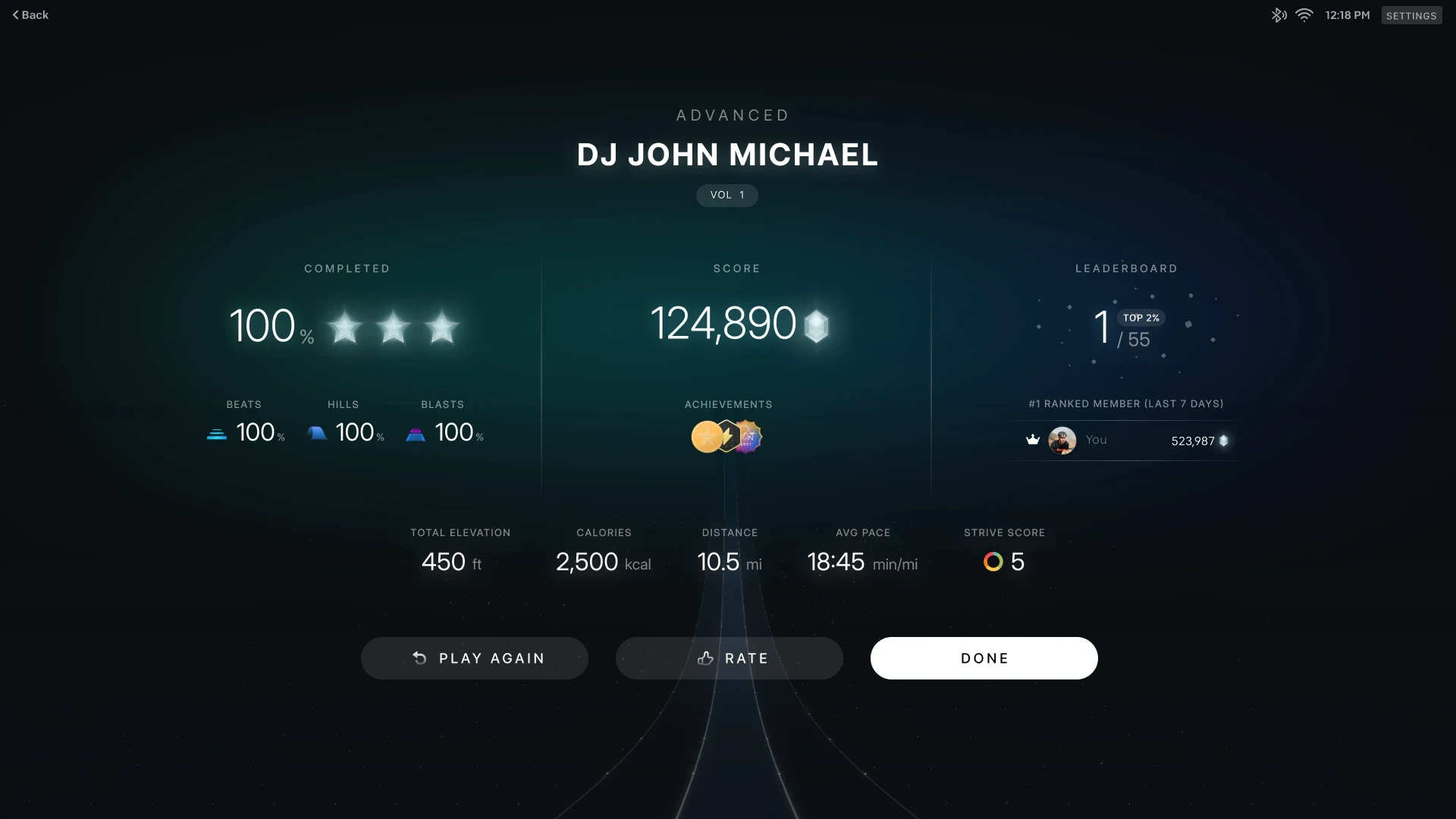
Summary: See progress and what to chase next.
Impact
Lanebreak Tread launched in 2023 and quickly became a favorite for solo sessions. Roughly 6% of all Tread users launched it weekly, aligning with expectations for an optional experience outside the class-first flow. The system introduced a new category of Peloton workout built on motion, clarity, and real-time feedback.
Impact
Lanebreak Tread launched in 2023 and quickly became a favorite for solo sessions. Roughly 6% of all Tread users launched it weekly, aligning with expectations for an optional experience outside the class-first flow. The system introduced a new category of Peloton workout built on motion, clarity, and real-time feedback.
What Lanebreak Taught Me
Principles in motion
•
Limits shaped logic. Clarity emerged from constraint.
•
Motion demanded pacing clarity. Decision speed became UX.
•
Effort drove engagement. Challenge felt embodied, not abstract.
•
Feedback matched strain. The UI had to react in rhythm with effort.
Reflections
Designing for movement forces clarity. There is no space for clutter or hesitation at speed. Every interaction must teach through feel, and every visual must earn its place.
Lanebreak changed how I think about systems. It showed how physical effort changes cognition, and that idea continues to influence how I design for fitness, health, and decision-based tools.
What Lanebreak Taught Me
Principles in motion
•
Limits shaped logic. Clarity emerged from constraint.
•
Motion demanded pacing clarity. Decision speed became UX.
•
Effort drove engagement. Challenge felt embodied, not abstract.
•
Feedback matched strain. The UI had to react in rhythm with effort.
Reflections
Designing for movement forces clarity. There is no space for clutter or hesitation at speed. Every interaction must teach through feel, and every visual must earn its place.
Lanebreak changed how I think about systems. It showed how physical effort changes cognition, and that idea continues to influence how I design for fitness, health, and decision-based tools.
More case studies
More case studies
Made with love ♡
Made with love ♡
© 2026 Michael Fofrich
© 2026 Michael Fofrich